
If you’ve scrolled TikTok, Instagram, or your group chat lately, chances are you’ve seen someone get called “pookie.” The pookie meaning has exploded across social media, but not everyone knows where it came from or how to use it correctly. This guide breaks down the full pookie meaning, its origins, and how it’s used across every major platform — so you never have to Google it mid-conversation again.
Meaning & Definition of Pookie
At its core, the pookie meaning revolves around affection. It’s a soft, cutesy nickname used to describe someone you care about deeply, whether that’s a partner, a best friend, or even a pet.
Primary Meaning
The primary pookie meaning is a term of endearment similar to “babe,” “honey,” or “sweetheart.” It’s typically used to address someone you love romantically, signaling closeness, comfort, and warmth.
Secondary Meaning
The secondary pookie meaning is broader and more playful — it’s used among close friends as a nickname that shows familiarity rather than romance. In some older slang contexts, “pookie” has also been used to describe a small, cute figure (like a stuffed toy) or, in specific street slang, something entirely unrelated to affection.
Example:
- “Good morning, pookie! Hope your day is amazing.” (romantic)
- “Pookie, you would not believe what just happened.” (friendly)
Background & Origin of the Word “Pookie”
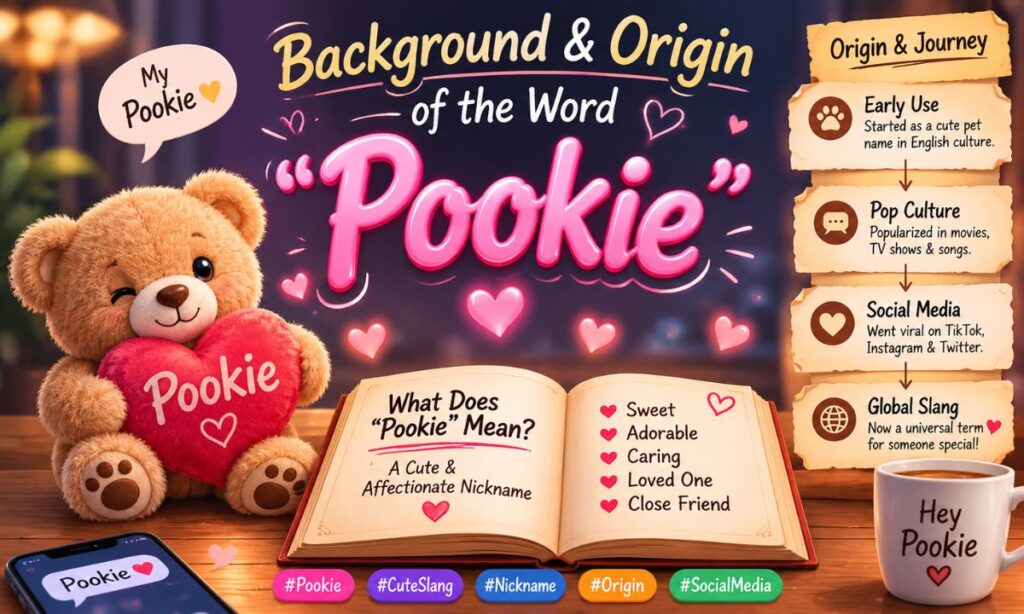
The pookie meaning we recognize today didn’t start on social media — it has roots going back nearly a century. The name “Pookie” was used as a nickname in the United States as early as the 1930s, and by the 1960s it had firmly become associated with affection and endearment.
The word gained more formal recognition when it was added to Urban Dictionary in the mid-2000s, cementing its place as internet slang. Many people also remember “Pookie” as the name of Garfield’s teddy bear in the classic comic strip, which introduced the term to an entirely different generation long before TikTok existed.
The modern resurgence of the pookie meaning is largely credited to a popular TikTok couple whose outfit videos and affectionate captions using “pookie” went viral, reintroducing the word to Gen Z and turning it into one of the platform’s most-used pet names.
Usage in Different Contexts
The pookie meaning shifts slightly depending on who’s saying it and why. Here’s how it plays out in real conversations.Pookie meaning changes with who says it. In a romantic context, it means “babe” or “love.” Couples use it to sound sweet and close.Pookie meaning also works between friends. Best friends say it just for fun. It shows love without anything romantic behind it.Pookie meaning can even apply to pets. Owners call their dog or cat pookie. It’s just a cute, warm nickname either way.
Romantic Context
This is the most common use of the word today. Partners use “pookie” as a replacement for “babe” or “love,” often in texts, captions, or comments to express closeness and affection.
Friendly Context
Close friends — especially women — use “pookie” casually and without romantic undertones. It’s a warm way to greet or refer to someone in your inner circle.
Pet Context
Pet owners frequently call their dogs, cats, or other animals “pookie” as a cute nickname, similar to calling them “baby” or “sweetie.”
Online Memes
In meme culture, “pookie” is often used ironically or humorously, sometimes paired with exaggerated affection to poke fun at overly sweet couples or friendships online.
Meanings Across Platforms (WhatsApp, Instagram, TikTok, Snapchat)
The pookie meaning doesn’t change drastically across apps, but the tone and usage style often do.Pookie meaning changes a little on every app. On WhatsApp, it stays personal. People use it in private chats with a partner or close friend.
On Instagram, pookie meaning feels more public. It shows up in captions and comments. Couples use it to look cute and loving online.
On TikTok and Snapchat, pookie meaning turns playful. TikTok users add it to trends and duets. Snapchat users drop it in quick, casual captions.
| Platform | Common Usage | Typical Tone |
| Used in personal chats between partners or close friends | Private, affectionate | |
| Used in captions, comments, and DMs | Public, aesthetic, romantic | |
| TikTok | Used in video captions, duets, and comment sections | Trendy, humorous, viral |
| Snapchat | Used in chat nicknames or captions on snaps | Casual, playful |
On WhatsApp, “pookie” typically appears in private one-on-one conversations, often as a saved contact name or a casual greeting between couples or close friends.
Instagram usage leans romantic and aesthetic. Couples use it in captions under photos, and the word often appears alongside heart emojis or matching outfit posts.
TikTok
TikTok is where the modern pookie meaning truly took off. It’s used in duets, comment sections, and video captions, often tied to trends about relationships or friendship goals.
Snapchat
On Snapchat, “pookie” is mostly used informally — as a nickname saved in someone’s contacts or as a caption on a quick, candid snap.
Other Fields (Technical or Formal Meanings)
Outside of slang, “pookie” has no widely recognized technical or formal meaning in business, science, or academic contexts. It remains almost exclusively a term of endearment or internet slang, with a few isolated regional exceptions (such as older, unrelated street slang usage that has largely fallen out of common use).
Common Misconceptions & Mistakes
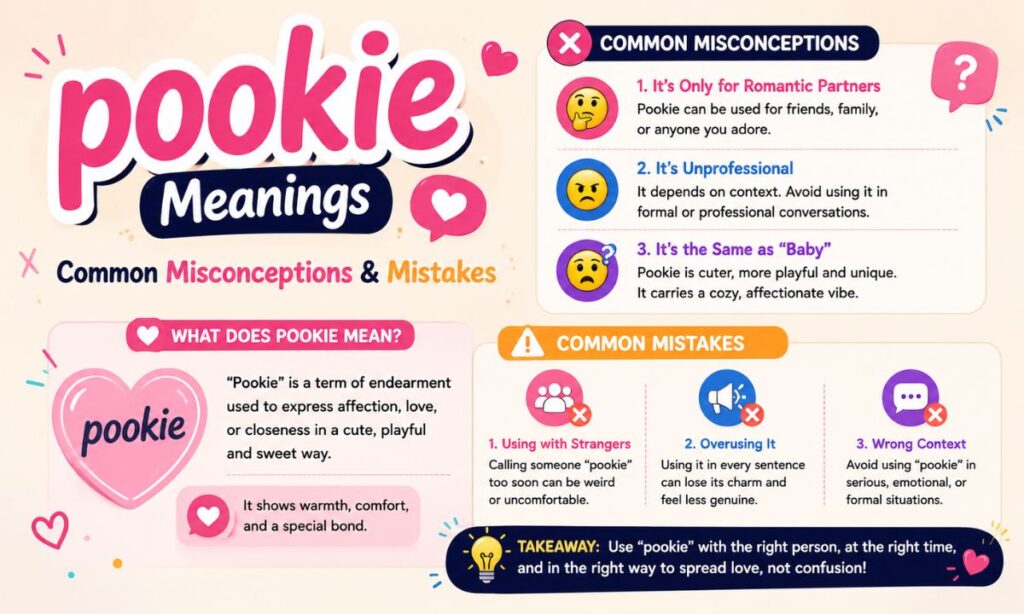
Because the pookie meaning varies by context, misunderstandings are common — especially across generations or cultures.
Common mistakes:
- Assuming “pookie” is always romantic, even when used platonically
- Confusing “pookie” with unrelated older slang terms
- Thinking the word is brand new when it actually dates back decades
- Believing it’s exclusive to one gender or age group
Reality: The modern pookie meaning is overwhelmingly positive and affectionate. Context — who says it, and how — matters far more than the word itself.
Similar Terms & Alternatives
If you like the warmth behind “pookie,” there are several similar affectionate nicknames people use interchangeably:
- Babe
- Boo
- Honey
- Sweetheart
- Cuddlemuffin
- Lovebug
- Bestie (for friendly context)
How to Respond to “Pookie”
Responding to “pookie” is simple — match the tone it was sent in. A romantic “pookie” deserves a warm reply, while a friendly “pookie” just needs a casual, upbeat response.
Examples:
- “Hey pookie!” → “Hey you! What’s up?”
- “Miss you, pookie.” → “Miss you more, pookie.”
- “Pookie, guess what happened today?” → “Tell me everything!”
Differences From Similar Words
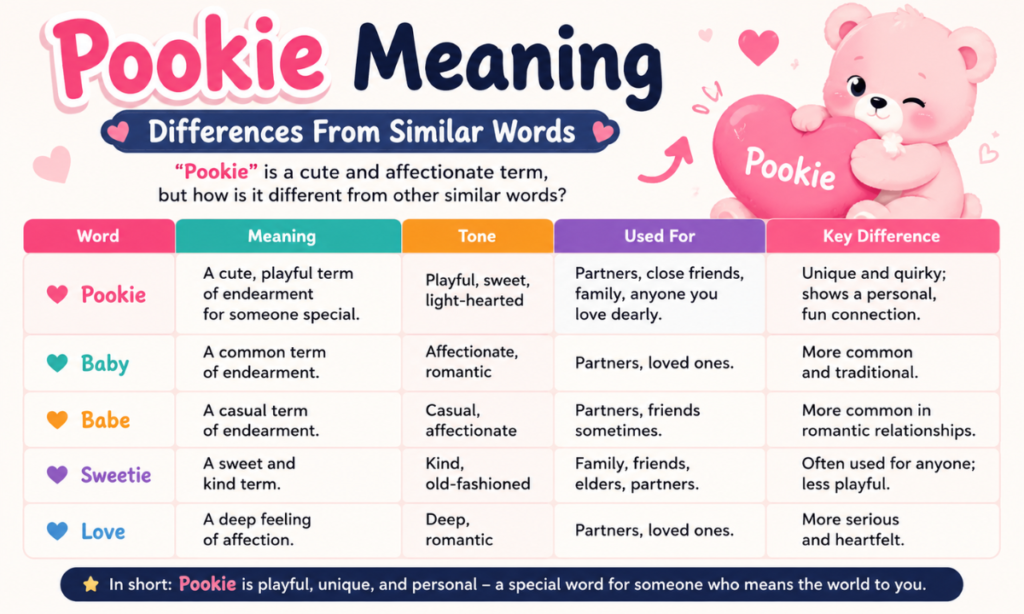
While words like “babe” and “boo” are almost always romantic, the pookie meaning is more flexible — it comfortably applies to partners, friends, and even pets. This versatility is part of why it has spread so widely across different types of relationships, unlike stricter romantic-only terms.
Relevance in Online Conversations & Dating Apps
On dating apps and in online conversations, “pookie” has become a low-pressure, playful way to build early rapport. It signals warmth without being overly serious, making it popular in the early stages of texting someone new, as well as in established relationships.Pookie meaning matters a lot in online chats today. People use it to sound sweet and casual. It makes texting feel warm and personal.On dating apps, pookie meaning often shows early interest. It feels playful, not too serious. Many people use it to break the ice fast.The pookie meaning also builds comfort over time. It turns simple texts into something special. That’s why it stays popular in online talk.
Popularity & Trends Over Time
Interest in the pookie meaning tends to spike whenever a viral couple or creator reuses the term online.The pookie meaning didn’t stay quiet for long. It grew fast once TikTok couples started using it. Millions of people picked it up within months.Search interest in pookie meaning spikes after viral videos. A single trending couple can bring the word back to life. This happens again and again online.
People still search pookie meaning in different ways today. Some look for it in English. Others search it in Urdu or on Urban Dictionary. The word keeps spreading worldwide. Search trends show consistent curiosity around related queries, including:
- Pookie meaning explained urban dictionary
- Pookie meaning explained in Urdu
- Explain the meaning of pookie urban dictionary
- Pookie meaning explained in English
This shows that the word’s popularity isn’t limited to English-speaking audiences alone — it has crossed language and cultural boundaries thanks to social media’s global reach.
Conclusion
The pookie meaning has evolved from a decades-old nickname into one of the internet’s favorite terms of endearment. Whether it’s used romantically, between friends, or even toward a pet, the word carries the same core idea: closeness and affection. Understanding the pookie meaning in context helps you use it naturally — and respond to it just as warmly when someone calls you their pookie.
FAQs
What does pookie mean in a relationship?
In a relationship, “pookie” is an affectionate nickname similar to “babe” or “honey,” showing love and closeness toward a partner.
Is pookie only used romantically?
No, the pookie meaning also applies to close friends and pets, making it a flexible term of endearment beyond romance.
Where did the word pookie originate?
The term dates back to the 1930s–1960s as a nickname in the U.S. and later gained internet fame through Urban Dictionary and viral TikTok couples.
Can you call a friend pookie?
Yes, calling a friend “pookie” is common and shows warmth and familiarity without romantic meaning.
What does pookie mean on TikTok?
On TikTok, “pookie” is used in captions and comments as a trendy, affectionate nickname, often linked to viral couple or friendship content.
Is pookie a Gen Z word?
While Gen Z popularized its recent comeback, the pookie meaning actually predates the generation by decades.
What’s a good response to being called pookie?
Simply respond warmly and in the same tone — for example, “hey pookie” back, or “aww, love you too.”
