
Texting has its own language. People use short forms to save time. One common term you might see is “TF.” It shows up in many chats and comments.
TF mean for “the f***.” It is used to add strong emotion to a message. People often use it when they are shocked or annoyed. It works like an intensifier in casual talk.
You will see TF paired with other words. Examples include “WTF,” “STFU,” or “GTFO.” Each version has its own meaning and tone. Knowing these helps you understand online chats better.
TF is mostly used among friends. It fits casual and informal conversations. It is not meant for professional messages. Using it in the wrong place can seem rude.
Understanding slang like TF helps you stay updated. Texting language changes fast these days. Knowing common terms makes chatting easier. It also helps you avoid confusion online.
What Does TF Mean in Texting
What Does TF Mean In Chat?
TF stands for “the f***.”
It’s an abbreviation, not a full word by itself. People use it to boost emotion in a sentence.
You’ll usually spot it attached to a question word. “What tf,” “why tf,” “how tf.” Sometimes people send it alone too, especially as a quick reaction.
The tf meaning in chat stays fairly consistent everywhere. Whether it’s a text message, a comment, or a DM, the intent is the same: react fast, react hard.
Simple Meaning (Explained Easily)
Think of TF as an emotional booster.
It doesn’t add new information. It adds intensity.
Look at the difference here:
- “Who ate my food?”
- “Who tf ate my food?”
Both sentences ask the same thing. But the second one feels more heated. That’s the entire function behind the tf meaning in chat. It turns a plain question into a loaded one.
Where Is It Used?
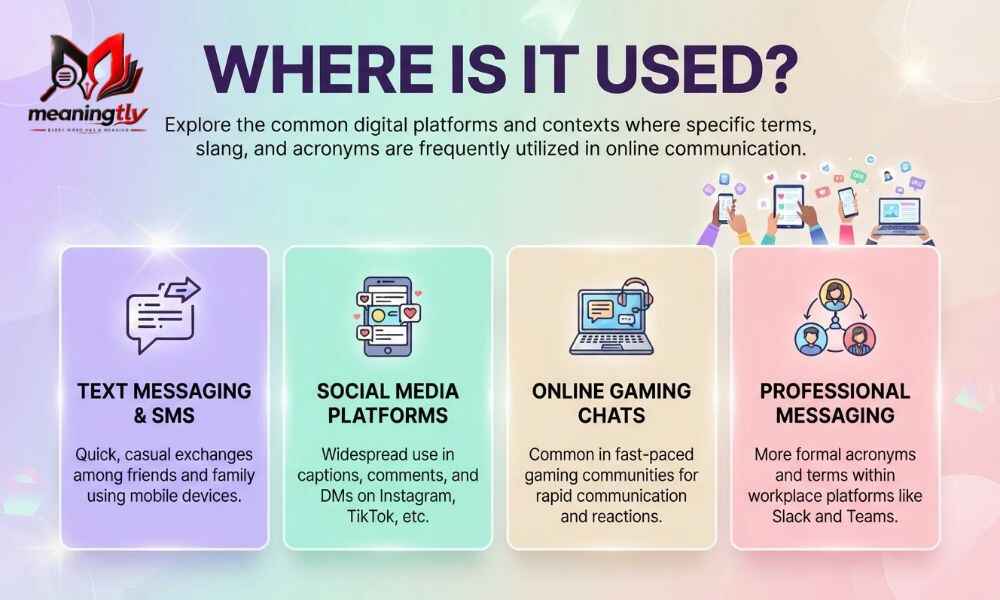
TF isn’t limited to one app. It travels across almost every messaging space. A quick look:
| Platform | Typical Example |
| Text messages | “why tf is it raining again” |
| Instagram comments | “wait tf is happening here” |
| TikTok comments | “how tf did she do that transition” |
| Discord servers | “who tf muted me” |
| Twitter/X | “tf did I just watch” |
| Snapchat | “tf you mean by that” |
Basically, wherever casual chatting happens, TF tends to follow. It’s less about the app and more about the tone of the conversation.
Why Do People Use It?
There are a few clear reasons people reach for TF instead of a plain sentence:
- It’s short. Two letters instead of a full curse word.
- It adds emphasis. A basic question suddenly feels dramatic.
- It fits fast typing. Texting culture rewards short, punchy phrases.
- It feels casual. It signals a relaxed, friendly tone.
- It expresses raw reaction. Shock, humor, or annoyance in two letters.
At its core, the tf meaning in chat is really about tone, not literal meaning. It shows how someone feels in the moment.
Examples (Real-Life Situations)
Real conversations make this term click faster than any definition. Here are a few everyday examples:
Example 1: Total shock
Friend: “I just got into my dream school!”
You: “wait tf, no way, congrats!!”
Example 2: Mild frustration
Sibling: “I used your charger and it broke.”
You: “why tf would you tell me that so calmly”
Example 3: Confusion
Group chat: “Meeting moved to Saturday.”
You: “tf? on a weekend?”
Example 4: Playful reaction
Coworker: “I accidentally called my boss ‘mom’ today.”
You: “how tf does that even happen 😭”
In each case, TF doesn’t change the message. It just turns up the emotional volume.
TF vs Similar Terms
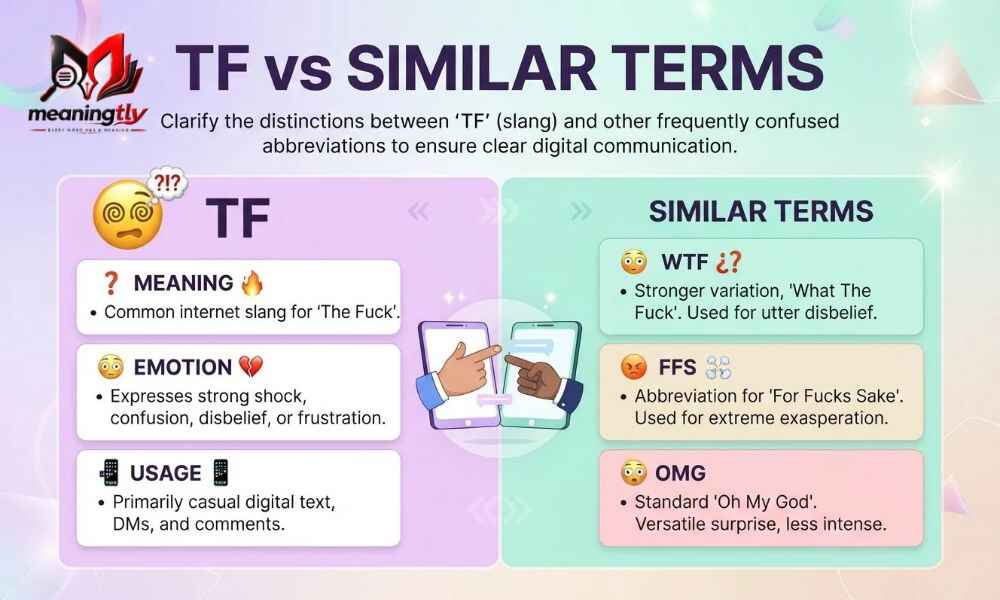
TF gets mixed up with a few other slang terms often. Here’s a simple comparison:
| Term | Full Meaning | Typical Feel | How It’s Used |
| TF | The f*** | Medium intensity | Attached to a question word |
| WTF | What the f*** | High intensity | Stands alone as a full reaction |
| SMH | Shaking my head | Low intensity | Shows disbelief or letdown |
| FR | For real | Low intensity | Confirms honesty |
| NGL | Not gonna lie | Low intensity | Introduces a blunt opinion |
| BRUH | Reaction word | Medium intensity | Expresses shock or humor |
The clearest difference is between TF and WTF. WTF works as a full, standalone reaction. TF usually needs a partner word to complete its meaning, like “why,” “how,” or “who.”
When Should You Use It?
Context decides everything with slang like this. Here’s a simple way to break it down:
Good situations for TF:
- Texting close friends
- Reacting to something funny
- Casual group chats
- Comment sections on relatable content
Situations to avoid TF:
- Emails or workplace messages
- School assignments
- Talking with family members who dislike swearing
- Formal or first-time conversations
A simple rule works here: read the room first. The tf meaning in chat only lands well in relaxed, informal settings.
Tf Meaning In Accounting
Outside of texting, TF shifts meaning completely.
In accounting, TF often stands for “trust fund” or “transfer” depending on the document. It usually appears in financial records, spreadsheets, or banking notes, with zero connection to internet slang.
TF Full Form In Instagram
On Instagram, TF almost always keeps its texting meaning.
It shows up in comments and captions the same way it does in regular chats, meaning “the f***.” It’s used to react to surprising or funny content.
Tf Meaning In Money
In money-related conversations, TF can stand for “transfer” or “trust fund,” similar to accounting use.
You might see it on a bank statement or payment app, referring to money moving between accounts, not emotion at all.
Tf Meaning In Business
In business settings, TF often means “task force.”
A task force is a small team formed to solve a specific problem. This meaning is completely separate from the texting version and shows up in official documents or workplace emails.
Tf Meaning In Gen Z
For Gen Z, TF keeps its internet slang meaning, but it’s used constantly and casually.
It appears in captions, comments, and texts almost as filler now, showing surprise, sarcasm, or humor rather than genuine anger.
Also Read This Meanings : OBJ Meaning Explained
TF Meaning In School

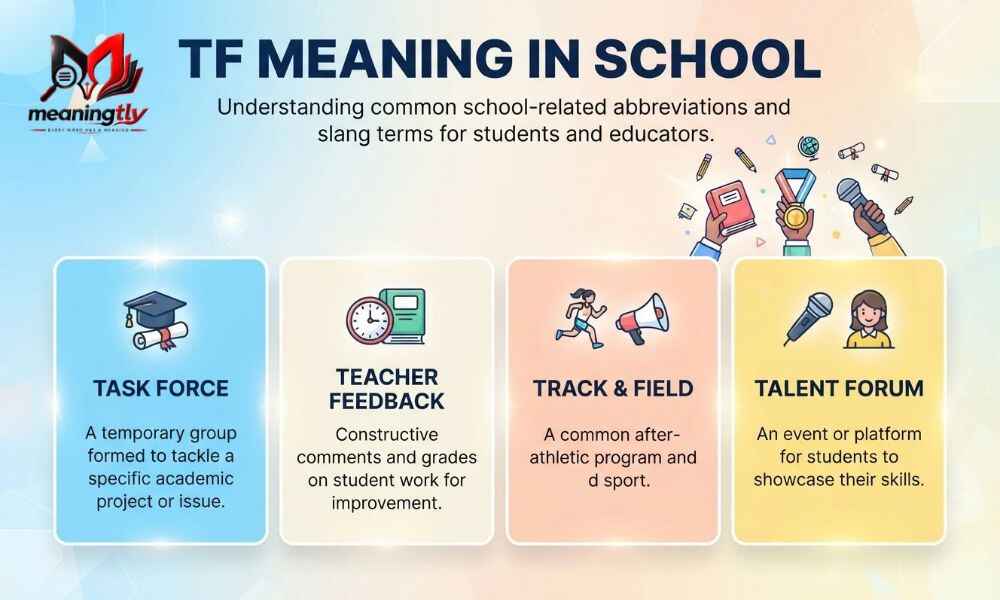
Texting has its own language today. “TF” is a small but common part of it. People use it to add emotion to their messages. It shows surprise, anger, or confusion in a quick way.
Most often, “TF” stands for “the f***.” It works as a booster word. It makes phrases like “what TF” or “why TF” feel stronger. It helps people express real feelings fast.
The meaning always depends on the context. Friends may use it in a joking way. Others might use it when they are truly upset. Reading the full message helps you understand the tone.
Slang like this keeps changing over time. New abbreviations show up every year. But “TF” has stayed popular for a while. It remains a normal part of casual chats.
In the end, “TF” is simple once you know it. It adds punch to everyday texting. Use it with people who won’t misunderstand it. Knowing slang like this helps you text with confidence.
FAQs
- What is TF full form?
TF commonly stands for “The F*ck” in texting and social media.
- What does TF mean in a good way?
TF can add emphasis, like “That’s TF amazing!” meaning very amazing.
- What is TF in Instagram?
On Instagram, TF usually means “The F*ck” to express surprise or confusion.
- What is TF in TXT?
In text messages, TF often stands for “The F*ck” or “Too Funny”, depending on context.
- What does “TF” stand for in Gen Z?
Gen Z commonly uses TF as shorthand for “The F*ck” in casual chats.
- What is TF in chatting?
In chatting, TF is used to show surprise, confusion, annoyance, or emphasis.
