ASMR is a feeling many people enjoy online. The short form means Autonomous Sensory Meridian Response. It is a calm, tingly feeling. It often starts on the scalp. Then it slowly moves down the neck and back.
Certain sounds can trigger it. Soft whispers are very common. So are tapping and crinkling. Some people like brushing sounds too. Everyone has their own favorite trigger.
Millions of people watch ASMR videos. Many use them to relax. Others play them to fall asleep. Some feel less stress after watching. It feels like a gentle hug for the mind.
Not everyone feels the tingles. That is perfectly normal. Scientists are still studying it. You can try a few videos and see. Put on headphones and enjoy the calm.
ASMR Meaning
What Is ASMR?
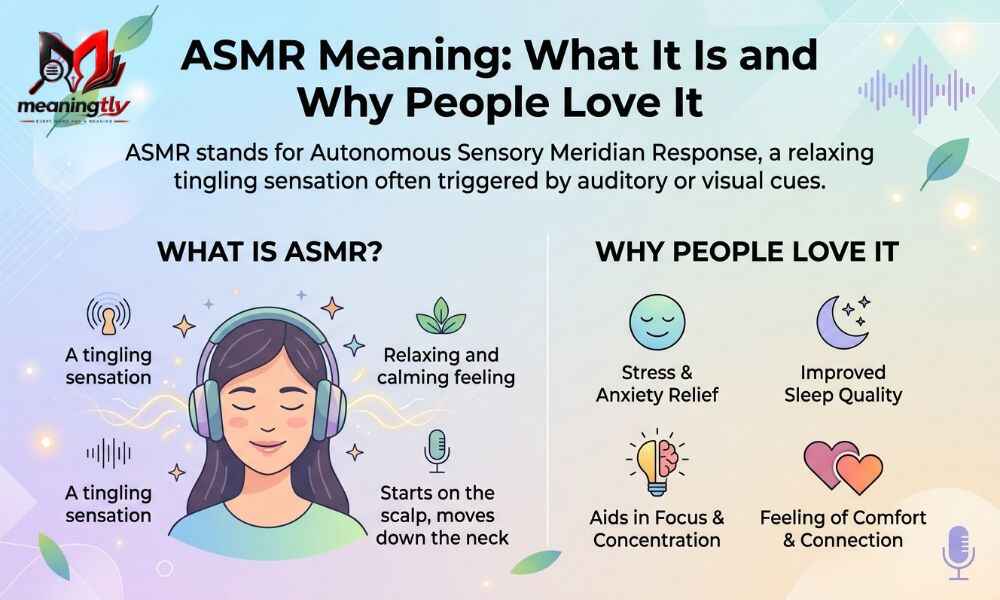
ASMR is a sensory response. It happens when a sound, sight or touch calms you. Your body feels warm and tingly. Your mind slows down.
ASMR Full Form
ASMR stands for Autonomous Sensory Meridian Response. The meaning of ASMR is autonomous sensory meridian response.
Let’s break each word down:
| Word | Simple Meaning |
| Autonomous | Happens on its own |
| Sensory | Linked to your senses |
| Meridian | A peak or high point |
| Response | Your body’s reaction |
ASMR Meaning in Simple Words
The ASMR meaning is easy. It is a relaxing tingle caused by gentle triggers. You do not control it. It simply happens.
Think of it as a quiet shiver. It feels good, not scary. Most people call it “tingles.”
Is ASMR a Real Thing?
Yes, people really feel it. Not everyone does, though. Researchers still study how it works. The science is young but growing.
ASMR Meaning in Short
Here is a quick answer for you.
ASMR meaning: A pleasant tingling feeling that starts in the head. It is triggered by soft sounds or gentle visuals. It often brings calm and sleepiness.
That is the core idea. The rest of this guide adds detail.
Where Did ASMR Come From?
The feeling is old. The name is new. People felt tingles long before the internet.
The Early Days
Years ago, people had no word for it. They shared stories on online forums. They asked, “Does anyone else feel this?” Many answered yes.
Those forum posts built a small community. People wanted a name. They wanted proof they were not alone.
Who Coined the Term?
A YouTuber named Jennifer Allen coined the term in 2010. She wanted a term that sounded calm and neutral. She chose a scientific-sounding name.
That choice helped the topic gain trust. The ASMR meaning became easier to share. Soon, the word spread across the web.
How It Grew
Creators began making videos on purpose. They whispered into microphones. They tapped on objects. Viewers loved it.
Today, millions watch ASMR content. It now lives on YouTube, TikTok, Spotify and more.
How Does ASMR Feel?
Every person feels it a bit differently. Still, many share common signs.
Common Signs of ASMR
- A tingle on the scalp
- Chills down the neck or spine
- A warm, soft feeling
- Deep calm
- Heavy eyelids
- Slower thoughts
How Long Does It Last?
The tingles may last a few seconds. The calm can last much longer. Some people feel relaxed for an hour.
Where Do You Feel It?
Most people feel it in the head first. Then it moves to the neck and shoulders. A few feel it in the arms or back.
Common ASMR Triggers
A trigger is what sets off the feeling. Triggers differ for each person. A sound that works for you may bore someone else.
Main Trigger Types
Triggers can include whispering, tapping and certain kinds of music. Visual triggers such as watching repetitive or satisfying actions also exist.
| Trigger Type | Examples |
| Sound | Whispering, tapping, crinkling, brushing |
| Sight | Slow hand moves, folding, painting |
| Touch | Light scratching, hair brushing |
| Attention | Personal care roleplay, soft talk |
Sound Triggers
Sound is the most popular trigger. Many people love soft voices. Others prefer sharp tapping.
Popular sounds include:
- Whispering
- Tapping on wood or glass
- Paper crinkling
- Page turning
- Keyboard typing
- Water drops
- Brushing a microphone
Visual Triggers
Some people respond to what they see. Slow and neat movements work best. Think of folding towels or drawing lines.
Touch Triggers
Light touch can spark tingles. A gentle hair brush is a common example. Many people also feel it when someone traces their back.
Personal Attention Triggers
This trigger feels like care. A creator may act like a barber or doctor. They speak softly and focus on you. Viewers feel looked after.
Popular ASMR Video Types
Creators use many styles. Each has a different mood. Pick what feels right.
Whisper Videos
The creator whispers close to the mic. Some read a story. Others just talk softly.
Tapping Videos
The creator taps on boxes, nails or plastic. The rhythm calms many viewers.
Roleplay Videos
The creator plays a role. It could be a teacher, nurse or friend. You feel like a guest in a calm scene.
Eating Videos
Some people enjoy soft chewing sounds. Others dislike them. This type is very personal.
Soundscape Videos
These use rain, wind or fire sounds. They help you sleep. Many do not need a voice at all.
Quick Comparison
| Video Type | Mood | Best For |
| Whisper | Soft and close | Sleep |
| Tapping | Rhythmic | Focus |
| Roleplay | Warm and caring | Comfort |
| Eating | Crisp or soft | Curious fans |
| Soundscape | Natural | Deep rest |
ASMR on YouTube and TikTok
Social media made ASMR famous. It is now a huge content niche.
What Does ASMR Mean on YouTube?
On YouTube, ASMR is a video label. The term often appears in video titles. It tells viewers the clip is made for tingles and calm.
Many creators add terms like “soft spoken” or “binaural.” These tags help fans find the right style. Binaural audio uses two mics. It makes the sound feel close to your ears.
What Does ASMR Mean on TikTok?
On TikTok, clips are short. They often show satisfying actions. Think slime, soap cutting or fast tapping.
The ASMR meaning stays the same. The format is just shorter.
Why Social Media Loves It
- It is easy to watch
- It needs no talent to enjoy
- It feels safe and calm
- It fits late-night scrolling
The Science Behind ASMR
Science is still catching up. Early studies show real body reactions. Let’s look at what we know.
What Happens in the Brain?
Some studies link ASMR to calm brain activity. People often feel pleasure and relief. Heart rate may slow down.
ASMR may boost hormones tied to better sleep, such as dopamine and oxytocin. These chemicals help you feel safe and happy.
What Do Reviews Say?
A recent review found clear evidence that ASMR can reduce stress and anxiety. It also showed that ASMR may improve short-term memory.
That is promising. Still, more research is needed. Do not treat ASMR as a cure.
How Many People Feel It?
Researchers estimate that about 20% of people respond to an ASMR trigger. So if you feel nothing, you are not odd. Many people simply don’t respond.
Benefits of ASMR
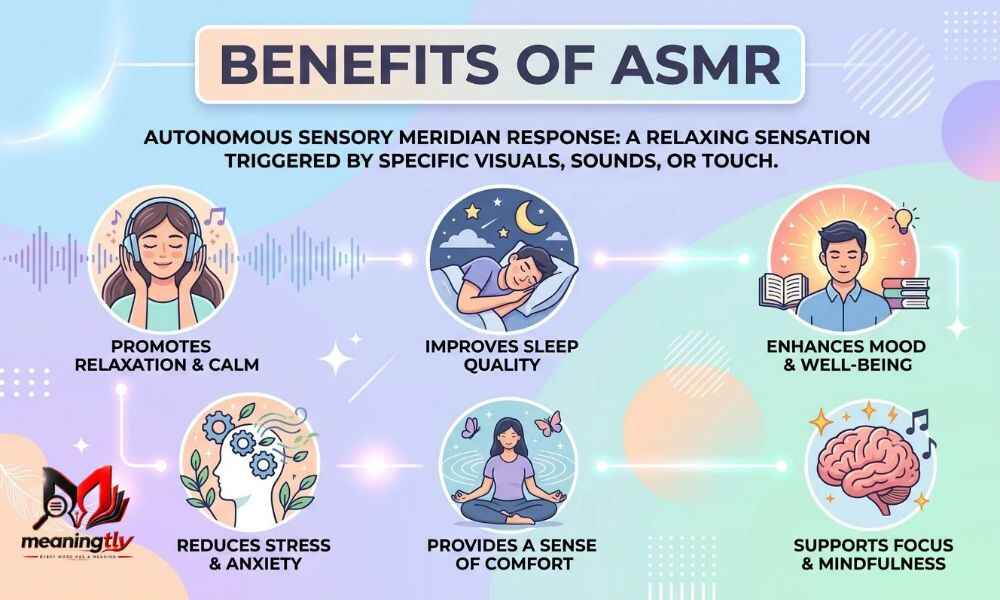
Many fans say ASMR helps daily life. Here are the top reported gains.
Reported benefits include relaxation, stress reduction, better sleep and improved mood.
1. Deep Relaxation
Soft triggers slow your thoughts. Your shoulders drop. Your breathing softens.
2. Lower Stress
A short session can calm a busy mind. Many people use it after work. It acts like a mental pause.
3. Better Sleep
Many fans use ASMR at night. The quiet sound helps them drift off. It works best in a dark, quiet room.
4. Mood Boost
Some people feel happier after a session. The warm tingles feel rewarding. Comfort rises.
5. Focus Support
A few people use light tapping or rain sounds while working. It blocks noise. It helps them stay on task.
Benefits at a Glance
| Benefit | How It Helps |
| Relaxation | Eases body tension |
| Stress relief | Calms racing thoughts |
| Sleep | Helps you wind down |
| Mood | Adds comfort |
| Focus | Masks noise |
ASMR for Sleep
Sleep is the top reason people try ASMR. Let’s see why it works for many.
Why It Helps
Your brain needs to feel safe to sleep. Soft sounds signal safety. Your body then relaxes.
How to Use It at Night
- Dim the lights.
- Put your phone on low brightness.
- Use soft headphones or a small speaker.
- Pick a calm video.
- Set a sleep timer.
Tips for Better Results
- Keep the volume low.
- Choose one voice you like.
- Avoid sudden loud sounds.
- Try audio-only if screens bother you.
ASMR vs Frisson
Many people mix up these two. They are not the same.
What Is Frisson?
Frisson is a quick chill. It often comes from music or emotion. It feels sharp and short.
ALR Meaning: Complete Guide to Its Use, Slang & Examples (2026)
Key Differences
| Feature | ASMR | Frisson |
| Feeling | Calm tingles | Sudden chills |
| Cause | Soft triggers | Strong emotion |
| Speed | Slow build | Fast burst |
| Mood | Relaxed | Excited |
The ASMR meaning centers on calm. Frisson centers on thrill. That is the simplest way to tell them apart.
Who Can Feel ASMR?
Anyone may feel it. Still, it does not work for all.
Why Some People Do Not Feel It
Brains differ. Some respond to soft cues. Others do not. It is not a flaw.
Some people even dislike the sounds. Whispering can feel itchy to them. This is common.
Can You Learn It?
You cannot force it. But you can explore. Try many triggers. You may find one that works.
Possible Downsides of ASMR
ASMR is safe for most people. Still, a few limits exist.
Not everyone responds to ASMR or finds it enjoyable.
Things to Watch
- Some sounds can annoy you.
- Late-night viewing may cut sleep time.
- Loud headphones can hurt your ears.
- Heavy reliance may delay real help for anxiety.
When to Seek Help
ASMR is not medical care. If stress or sleep trouble lasts, talk to a doctor. A professional can guide you better.
How to Try ASMR
Start slow. You need no special gear.
Step-by-Step Guide
- Find a quiet spot.
- Wear comfy headphones.
- Search “ASMR” on YouTube.
- Pick a trigger type.
- Watch for ten minutes.
- Note how you feel.
- Try a new style if nothing happens.
Gear That Helps
| Item | Why It Helps |
| Headphones | Clear, close sound |
| Soft pillow | Comfort |
| Dark room | Less distraction |
| Sleep timer | Saves battery and sleep |
Make It a Habit
Try ASMR at the same time each day. A fixed routine tells your body to relax. Ten minutes is enough.
Common Mistakes to Avoid
Beginners often make small errors. Here is how to skip them.
- Setting the volume too high. Keep it soft.
- Giving up too fast. Try more than one style.
- Watching while stressed at the screen. Close your eyes sometimes.
- Using it as the only fix. Pair it with good sleep habits.
ASMR Slang and Daily Use
The ASMR meaning has grown beyond videos. People now use the word in casual talk.
How People Use It
Someone may say, “This sound is so ASMR.” They mean it is calm and satisfying. The word has become a vibe.
Examples
- “Rain on the roof is pure ASMR.”
- “I love the ASMR of a fresh notebook.”
- “That ice crunch is ASMR to me.”
Brands also use it. Ads may feature soft sounds to feel premium. It is now part of pop culture.
WS Meaning: Complete Definition, Uses & Examples (2026)
Key Terms Linked to ASMR
These words often appear near the ASMR meaning. Knowing them helps you search better.
| Term | Meaning |
| Tingles | The classic ASMR feeling |
| Trigger | What sparks the response |
| Binaural | Audio that feels 3D |
| Whisper | Soft, breathy speech |
| ASMRtist | A creator of ASMR content |
| Soft spoken | Quiet, calm talking |
| Roleplay | Acting out a scene |
| Sleep aid | Used to fall asleep |
Myths About ASMR
Some beliefs are wrong. Let’s fix them.
Myth 1: ASMR Is Always Sexual
False. Most ASMR is calm and caring. People use it to relax. Not for arousal.
Myth 2: Everyone Feels It
False. Only some people do. That is normal.
Myth 3: ASMR Is Just Whispering
False. It includes tapping, visuals, touch and more.
Myth 4: ASMR Is a Cure
False. It may help you relax. It does not treat illness.
Why ASMR Still Matters
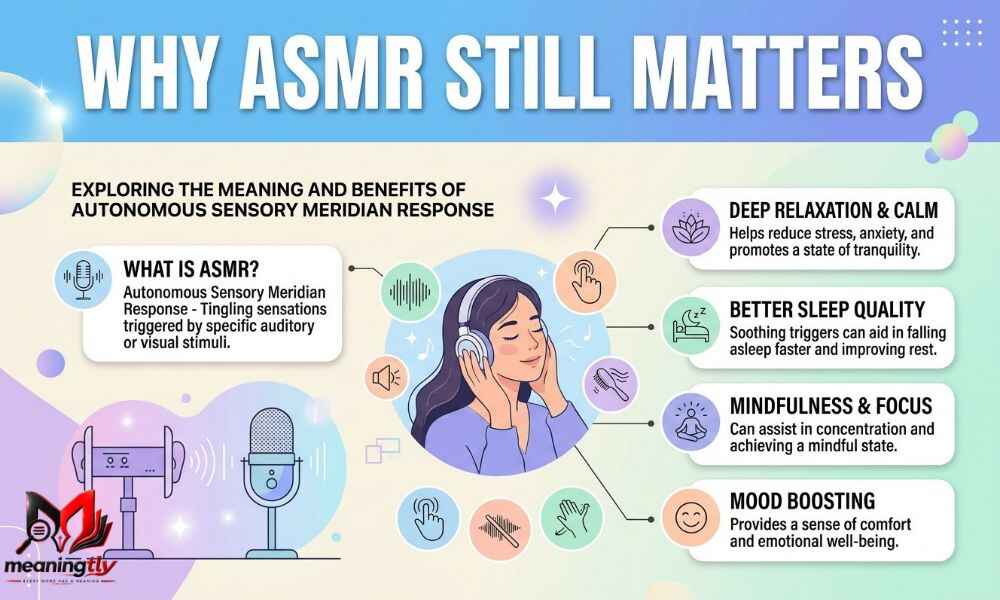
Life moves fast. Stress is high. People want quiet moments. ASMR gives a simple, free way to slow down.
It also builds community. Fans share favorite triggers. Creators connect with viewers. The ASMR meaning now reaches far beyond one video.
As research grows, we will learn more. For now, it remains a gentle tool. Use it with care and curiosity.
Conclusion
ASMR stands for Autonomous Sensory Meridian Response. It is a calm, tingly feeling. Many people feel it on the scalp and neck. It often spreads down the spine. The feeling is soft and relaxing.
Certain sounds can trigger it. Whispering is a common one. So are tapping, crinkling, and brushing. Slow hand movements work for some people. Every person reacts in a different way.
Millions of people watch ASMR videos. They use them to relax or fall asleep. Some find relief from stress this way. Others just enjoy the soothing sounds. Not everyone feels the tingles, and that is okay.
ASMR is simple and gentle. It gives the mind a quiet break. You can try it with headphones on. Find the sounds that feel right for you. A little calm can go a long way.
FAQs About ASMR Meaning
What is the ASMR meaning?
It means Autonomous Sensory Meridian Response. It is a calm, tingly feeling caused by soft sounds or visuals.
What does ASMR stand for?
ASMR stands for Autonomous Sensory Meridian Response.
What does ASMR mean on TikTok?
It means short clips made to feel calm and satisfying. They use sounds like tapping or soft talk.
What does ASMR mean on YouTube?
It labels videos made to trigger tingles and relaxation. Creators use whispers, taps and soft sounds.
Who invented the term ASMR?
YouTuber Jennifer Allen coined it in 2010.
Is ASMR real?
Yes, many people feel it. Science is still studying how it works.

1 thought on “ASMR Meaning: Fascinating Facts You Should Know(2026) ”