
JSP stands for Java Server Pages. It is a technology used to build web pages. Many people search for JSP meaning when they start learning web development. It helps create dynamic content easily.
Understanding JSP meaning is important for beginners. JSP allows developers to mix HTML with Java code. This makes web pages more powerful and flexible. It runs on a server and sends results to the browser.
The JSP meaning also connects to how websites work today. Many websites use JSP to show live data. It saves time and reduces coding effort. Developers find it simple once they know the basics.
In short, JSP meaning is easy to understand. It is a helpful tool for building websites. Beginners can learn it step by step. With practice, anyone can use JSP confidently.
JSP Meaning Explained
What Does JSP Mean in Text?
In texting, JSP almost always means “Just Playing.”
It’s what someone types after a joke, a tease, or an exaggerated comment. It tells you: don’t take that last line seriously.
Think of it like a digital wink. You can’t see someone’s face over text. You can’t hear their tone. JSP fills that gap.
Here’s a quick example:
“You’re the worst driver I’ve ever seen. JSP, you’re actually pretty good lol.”
The JSP meaning here is simple. The first line was a joke. The second line clears it up.
People also write it in lowercase, like “jsp,” and it means the exact same thing. Slang doesn’t care about capitalization.
The JSP meaning in text isn’t tied to one single app. You’ll see it on iMessage, WhatsApp, Snapchat, Instagram, and Discord. Wherever people joke around in short messages, JSP tends to show up.
It’s also worth noting that JSP rarely stands alone. It almost always follows something else — a joke, a tease, or a dramatic statement. On its own, without context, JSP can look confusing. Paired with a joke, the JSP meaning becomes obvious immediately.
Here’s another quick example that shows the pattern clearly:
“I’m telling everyone what you did 😂 JSP, your secret’s safe with me.”
That’s the core JSP meaning in a nutshell: a joke, followed by a quick signal that it wasn’t real.
Different Meanings of JSP (Based on Context)
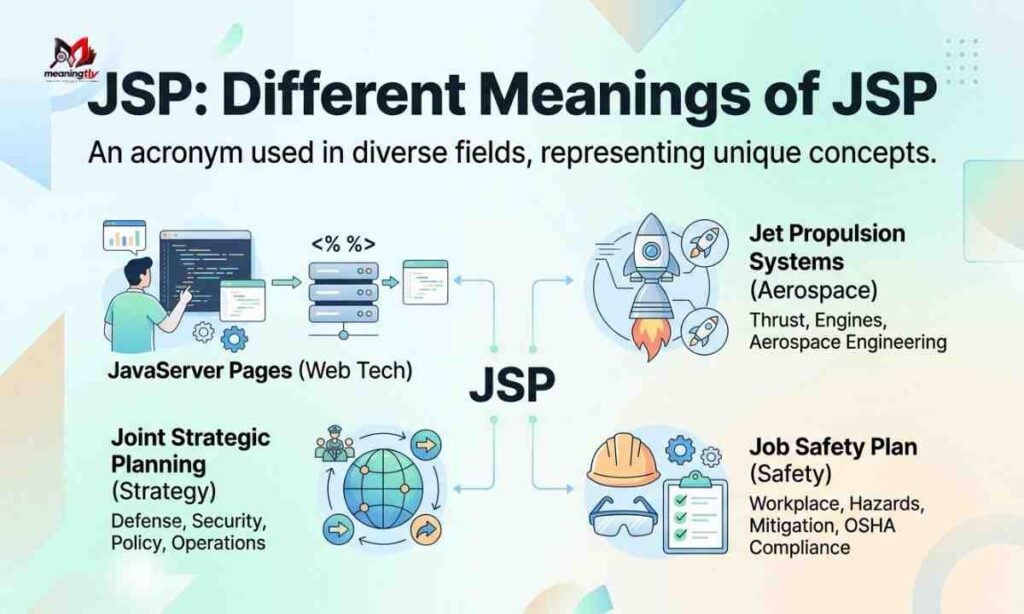
JSP is not a one-meaning acronym. The correct definition depends entirely on where you see it.
Here are the three main meanings people search for:
- Just Playing – the texting slang version, used after jokes.
- Je sais pas – French for “I don’t know,” common in French text chats.
- JavaServer Pages – a Java-based web technology used to build websites.
You’ll almost never confuse these three once you know the setting. A joke between friends means slang. A French conversation means “I don’t know.” A tech conversation means web development.
JSP as “Just Playing”
This is the version you’ll see most in English texting. It shows up on Snapchat, Instagram, TikTok, and group chats.
JSP as “Je Sais Pas”
If a French-speaking friend texts “jsp,” they’re probably shrugging. It means “I don’t know” or “I have no idea.”
Example:
“Tu viens ce soir? Jsp encore.”
That roughly means “Are you coming tonight? I don’t know yet.”
JSP as JavaServer Pages
In coding and web development, JSP stands for JavaServer Pages. It’s a server-side technology that lets developers build dynamic web pages using Java. This meaning has nothing to do with texting slang, but it’s still a common Google search.
How to Tell Which JSP Meaning Applies
Confused about which definition fits your conversation? Ask yourself these quick questions:
- Is the message casual and playful? It’s probably “Just Playing.”
- Is the conversation happening in French? It likely means “Je sais pas.”
- Is the topic about coding, servers, or Java? Then it’s JavaServer Pages.
Context clears up the JSP meaning almost every single time. You rarely need to guess for long.
Why People Use JSP
Text messages strip away tone completely. A joke can look mean without the right cues around it.
That’s the real reason JSP exists. People add it to:
- Soften a joke that might sound harsh.
- Clarify that a statement wasn’t serious.
- Keep a conversation light and friendly.
- Save time instead of typing “I’m just playing around.”
- Match the casual tone of the people they’re texting.
JSP works the same way as LOL, JK, and lol did before it. Short text needs short signals. JSP is one of them.
It’s also popular because it feels a little softer than JK. JK can sound like a quick correction. JSP feels more playful, almost like the joke is still going.
There’s a small psychology behind this. Text messages can’t carry a smile, a wink, or a sarcastic tone of voice. Something meant as a light joke can look harsh once it’s just black text on a screen.
Slang like JSP exists to patch that gap. It’s a small, three-letter fix for a big communication problem. Without it, plenty of harmless jokes would land the wrong way.
That’s also why the JSP meaning stays so consistent across different age groups and platforms. The core purpose — softening a joke — doesn’t really change, even as the slang itself evolves.
JSP Meaning Quick BioWiki Table
Here’s a fast-reference table for the JSP meaning across every common context.
| Context | JSP Meaning | Used In |
| Texting slang | Just Playing | SMS, DMs, group chats |
| French chat | Je sais pas (I don’t know) | French text conversations |
| Web development | JavaServer Pages | Java coding, server-side scripting |
| Snapchat | Just Playing | Snap captions, chat replies |
| Just Playing | Comments, DMs | |
| Formal writing | Not recommended | Emails, business chats |
Keep this table handy. If you ever forget what JSP means in a specific chat, the setting almost always gives it away.
This table is useful because JSP rarely announces its own meaning. Nobody texts “JSP (Just Playing)” in full. You’re expected to pick up the meaning from context, and this quick reference makes that easier.
If you bookmark one section of this guide, make it this table. It covers the JSP meaning across nearly every situation you’ll run into.
How JSP Is Used in Real Conversations
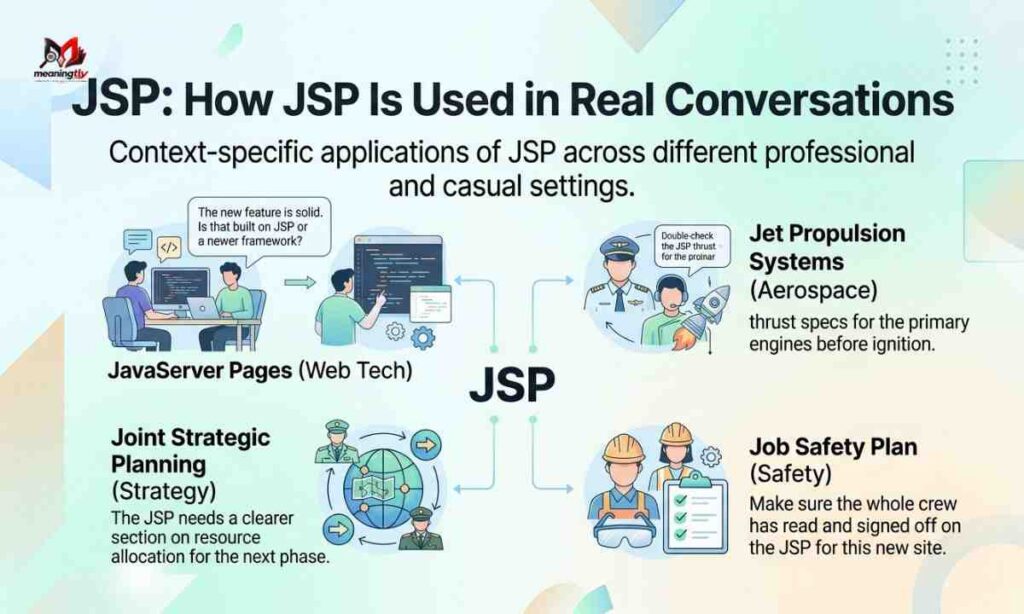
JSP usually shows up right after a joke or a tease. It rarely opens a conversation on its own.
Here are a few short chat examples:
Example 1
Sam: You cook like a five-year-old. JSP, dinner was actually amazing.
Example 2
Mia: I’m never lending you my charger again. Mia: JSP lol, here you go.
Example 3
Jay: Bro you snore like a truck engine 😂 JSP.
Notice the pattern. Someone says something bold. Then JSP softens it right away.
People also use JSP as a short closer at the end of playful banter, almost like a punctuation mark for jokes.
Example 4
Alex: You owe me fifty bucks and my patience back. Alex: JSP, we’re good, don’t worry about it.
Example 5
Chris: I saw your ex today, he looked rough lol. Chris: JSP that was mean, ignore me.
Notice how JSP shows up even when the sender admits the joke was a little much. It’s flexible that way. It can soften a light tease or walk back something that went slightly too far.
Group chats use JSP constantly, since jokes fly back and forth quickly and nobody wants a comment misread as a real insult. In these fast-moving threads, JSP acts almost like a safety net for humor.
Example 6
Priya: Ngl your outfit yesterday was questionable. Priya: JSP you always look great, I’m just messing around.
Example 7
Dev: I told everyone about your karaoke fail 😂 Dev: JSP I didn’t tell anyone, calm down.
These longer exchanges show something important. JSP doesn’t just soften one line — it often resets the whole tone of a conversation, letting both people relax and keep joking without any real tension.
It also works well in reverse order. Some people open with JSP before the joke instead of after it, like “JSP but you really can’t dance 😂.” Either placement keeps the same meaning, as long as the joke and the softener sit close together.
When JSP Can Sound Rude
JSP is friendly most of the time. But timing matters more than the word itself.
It can sound rude when:
- It follows a genuinely hurtful comment.
- The other person is clearly upset, not amused.
- It’s used to dodge accountability after an insult.
- It’s sent to someone who doesn’t know the slang yet.
Example of a risky use:
“Wow, you really failed that test huh. JSP.”
If the other person is already embarrassed, JSP won’t fix that. The joke has to feel playful before JSP can soften it. It can’t rescue a comment that was mean from the start.
Read the room first. Then decide if JSP fits.
Here’s a simple way to check: would the joke still feel okay without JSP attached? If yes, JSP just adds a friendly touch. If no, JSP won’t fix the damage on its own.
Tone also travels differently depending on the platform. A JSP comment on a public Instagram post carries more weight than the same line in a private DM between close friends, since more people can see it and misread it.
When to Use JSP
JSP works best in casual, low-stakes conversations. Here’s when it fits naturally:
- Texting close friends or siblings.
- Teasing someone you have an easy, joking relationship with.
- Commenting on social media posts.
- Wrapping up a playful exaggeration.
- Lightening the mood after a joke that landed a bit too flat.
If the relationship is casual and the joke is gentle, JSP almost always works.
A few more good scenarios:
- Replying to a friend’s dramatic overreaction with a joke of your own.
- Ending a playful roast session on a friendly note.
- Adding a lighthearted twist to an exaggerated compliment or insult.
- Signing off a joking text thread before switching topics.
In all of these, JSP acts like a soft landing after a joke takes off.
When NOT to Use JSP
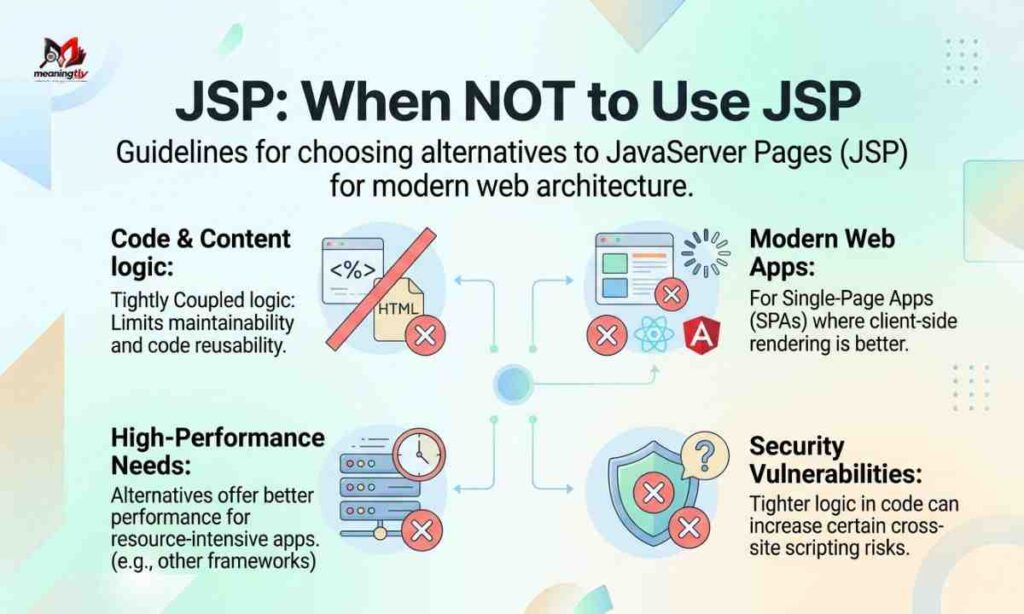
JSP isn’t built for every situation. Skip it in these cases:
- Professional emails or work Slack messages.
- Conversations with people you don’t know well.
- Serious topics like health, money, or relationships.
- Formal writing, like essays or reports.
- Any message where the joke could genuinely hurt someone.
In short: keep JSP inside casual, friendly texting. It doesn’t belong in formal spaces.
A good rule of thumb: if you wouldn’t use “lol” in the same message, skip JSP too. Both belong to the same casual register, and both feel out of place once a conversation turns formal or serious.
It also helps to think about your audience’s familiarity with slang. Parents, grandparents, or older coworkers might not recognize JSP at all, which can lead to more confusion than clarity.
JSP vs Similar Slang
JSP has a few close cousins. Here’s how they compare.
| Slang | Full Meaning | Vibe | Best Used For |
| JSP | Just Playing | Playful, teasing | Softening jokes |
| JK | Just Kidding | Direct, corrective | Quickly walking back a statement |
| LOL | Laughing Out Loud | Reactive | Responding to something funny |
| NGL | Not Gonna Lie | Honest, upfront | Sharing a real opinion |
| TBH | To Be Honest | Sincere | Serious or blunt statements |
| IDK | I Don’t Know | Neutral | Uncertainty in English |
JSP vs JK
Both mean the sender is joking. JK is more widely recognized and feels a bit more direct. JSP feels a little more playful and keeps the joke’s energy going a bit longer.
JSP vs LOL
These do different jobs. LOL reacts to something already funny. JSP explains that your own last message wasn’t serious. One responds, the other clarifies.
JSP vs NGL and TBH
These two lean into honesty. JSP does the opposite — it steps back from a statement instead of standing firmly behind it. Using JSP and TBH in the same sentence would send mixed signals.
JSP vs IDK
In English, these mean completely different things. IDK means “I don’t know,” while JSP means “Just Playing.” But in French texting, JSP and IDK line up perfectly, since JSP translates to “je sais pas,” or “I don’t know.” Always check the language of the conversation before assuming which meaning applies.
JSP vs ROFL and LMAO
ROFL and LMAO react to something funny in the moment, just like LOL does. JSP doesn’t react to humor — it explains the intent behind your own message. You could technically use both together, like “LMAO JSP that was a joke,” without any contradiction.
How to Reply to JSP
Replying to JSP is easy. Match the light tone and move on.
Good replies include:
- “Lol okay.”
- “Haha fair enough.”
- “You got me for a second.”
- “😂 noted.”
- “Okay okay, I see you.”
Avoid replying with a long, serious explanation. JSP is casual by nature, so a short, easygoing reply keeps the conversation flowing.
If the joke actually stung a little, it’s fine to say so honestly, like “Ouch, but okay lol.” That keeps things real without killing the mood.
Here’s a small table of reply options based on how the joke felt:
| How It Felt | Reply Example |
| Totally fine | “Lol okay, fair point.” |
| A little much, but funny | “Wow rude, but okay 😂” |
| Actually kind of hurt | “Ouch, but I get it lol.” |
| Didn’t land at all | “Lol I didn’t get that one.” |
Matching your reply to how the joke actually felt keeps the conversation honest, even inside a casual exchange.
Why JSP Is Trending
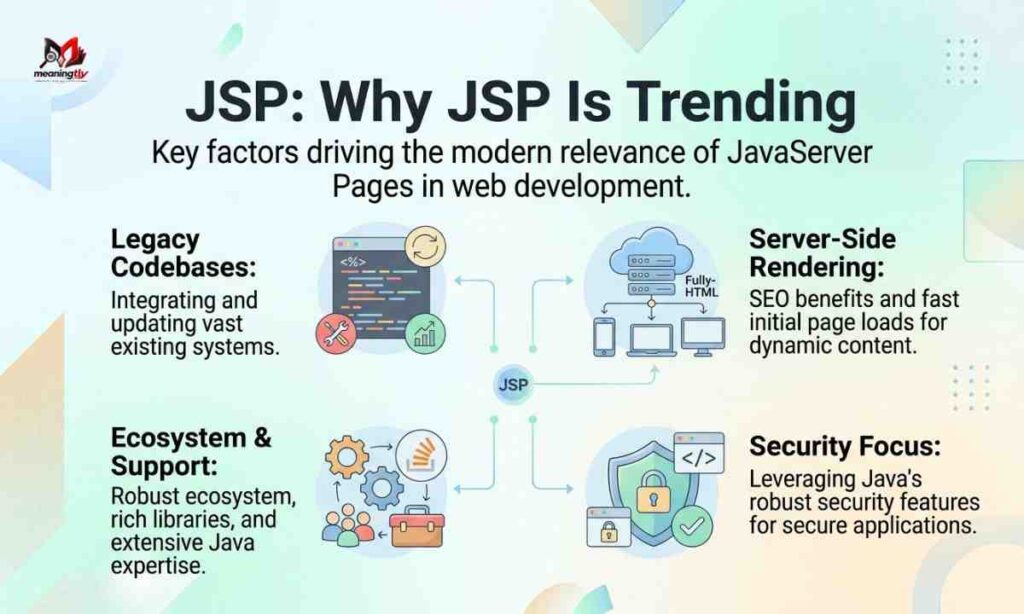
Texting slang moves fast, and JSP has stuck around because it fills a real gap. Group chats, comment sections, and DMs all move quickly, and short acronyms help conversations keep pace.
JSP also spread through social media the same way most slang does: repetition. Once people see it in captions, replies, and comments enough times, they start using it without even thinking about it.
Short-form platforms pushed it even further, since captions and comments reward brevity over full sentences.
Slang like JSP also spreads through imitation. Once a few popular accounts or group chats start using it, friends copy the pattern without thinking twice. That’s how a niche abbreviation turns into something almost everyone recognizes within a year or two.
Search interest in the JSP meaning tends to spike whenever it appears in a viral video, meme, or trending comment thread. New users see it, don’t recognize it, and go looking for an explanation — which is exactly how slang guides like this one keep getting used.
JSP in Snapchat
On Snapchat, JSP almost always means “Just Playing.” Friends use it after teasing snaps or joking captions.
A typical Snapchat exchange looks like this:
“You’re actually the worst at Mario Kart 😂 JSP, you’re getting better.”
It’s casual, quick, and fits Snapchat’s fast, friend-to-friend style perfectly.
Snapchat’s whole format encourages this kind of shorthand. Snaps disappear quickly, so captions stay short and punchy. JSP fits right into that fast, low-effort style, letting friends joke around without typing out a full sentence.
You’ll also see it in Snapchat group chats, often paired with emojis like 😂 or 💀 to reinforce the joking tone.
JSP mean from a girl
The meaning of JSP doesn’t change based on who sends it. From a girl, a guy, or anyone else, JSP still means “Just Playing.”
What can shift is the emotional context. If it follows flirty teasing, it usually signals playful interest rather than a real insult. If it follows a joke among friends, it’s just banter. The gender of the sender doesn’t change the definition — the surrounding conversation does.
JSP mean from a guy
The same logic applies here. From a guy, JSP still means “Just Playing.” It might follow a joke between buddies, a teasing comment during a game, or a flirty exchange. The core JSP meaning stays fixed — only the emotional flavor around it shifts based on who’s texting whom.
JSP mean in Instagram
On Instagram, JSP shows up mostly in comments and DMs. It softens a teasing comment on a photo or reel.
Example comment:
“Bro why’d you post this one 😭 JSP you look great.”
It tells the poster the first half wasn’t a real jab.
Instagram comments are public, which makes JSP even more useful there. A joking comment without any softener can look harsh to strangers scrolling by, even if the poster and commenter are close friends. Adding JSP signals the tone to everyone reading, not just the person being tagged.
JSP and Servlets are still important for Java developers
JSP Meaning stands for Java Server Pages. It helps developers build dynamic web pages. Many companies still use it today. Understanding JSP Meaning is useful for every Java coder.
Servlets work closely with JSP files. They handle requests from the browser. Together they create strong web applications. This combination is still taught in schools.
Learning JSP Meaning helps beginners understand Java web development. It shows how the server sends data to users. Servlets manage the logic behind the scenes. Both skills make a developer job ready.
Many old systems still run on JSP and Servlets. Companies need experts to maintain them. This keeps the JSP Meaning skill valuable. Java developers should not ignore this technology.
Many banking systems, university portals, and older enterprise tools were originally built using JSP and servlets. Even as companies migrate toward newer frameworks, plenty of these systems remain in production, which keeps demand for JSP knowledge alive in the Java job market.
For developers, understanding JSP means understanding how server-side Java code generates the HTML a browser eventually displays. It’s a completely separate skill from knowing what JSP means in a friend’s text message, but the same three letters cover both worlds.
Common Mistakes People Make With JSP
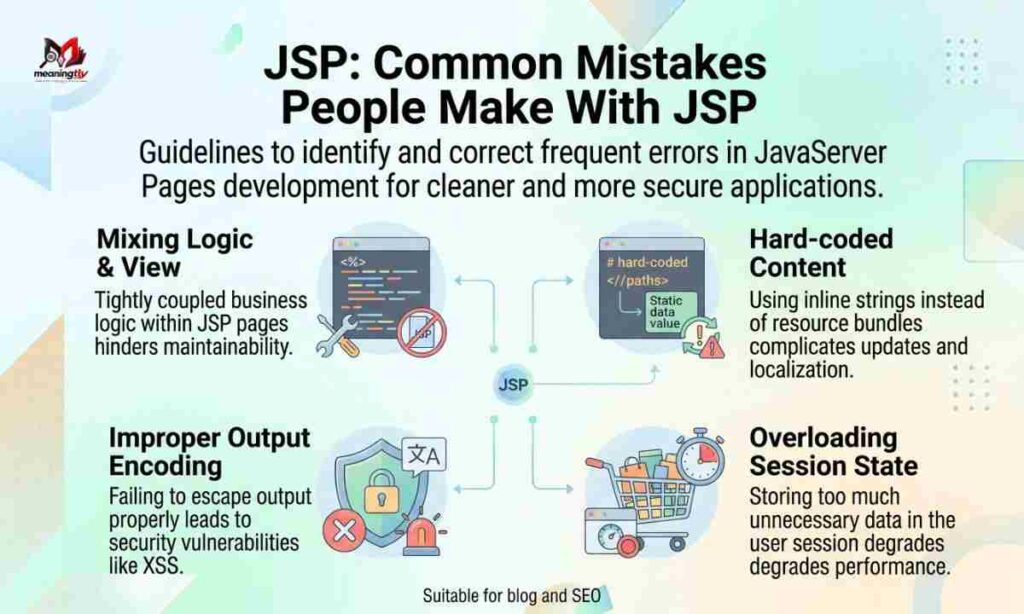
Even simple slang gets misused sometimes. Here are a few common mistakes to avoid.
- Using JSP after a genuinely mean comment. JSP softens jokes, not insults. It can’t undo something hurtful.
- Sending JSP to someone unfamiliar with slang. Not everyone knows the JSP meaning, especially older relatives or new coworkers.
- Assuming JSP always means “Just Playing.” Context matters. French chats and coding conversations use it differently.
- Overusing it in every message. JSP loses its impact if it’s attached to every single sentence.
- Confusing JSP with JK in formal writing. Neither belongs in professional communication, but people sometimes slip them into work chats by habit.
Avoiding these small mistakes keeps your texting clear and keeps the JSP meaning from getting lost in translation.
A Quick Look at JSP’s Origin
JSP Meaning stands for JavaServer Pages. It is a technology used to build web pages. Sun Microsystems created it in 1999. It helps mix HTML with Java code easily.
Understanding JSP Meaning helps beginners learn web development. Before JSP, developers used only servlets. Servlets made pages hard to write and read. JSP made the process much simpler.
The JSP Meaning also shows its main goal. It separates design from logic in web pages. This makes coding neat and organized. Developers can update pages faster this way.
Today, JSP Meaning is still important in Java web development. Many old and new systems still use it. It works well with servlets and Java EE. Learning JSP Meaning helps you understand Java web basics.
Common Mistakes
JSP Meaning Across Age Groups
Not everyone recognizes JSP right away, and that gap usually comes down to age and texting habits.
- Teens and young adults tend to know the JSP meaning instantly, since they see it daily on social media.
- Adults in their 30s and 40s may recognize it but use it less often themselves.
- Older generations often haven’t encountered it at all, which is why it can cause confusion in family group chats.
Conclusion
If you’re texting someone outside your usual friend group, it’s worth checking whether they’ll actually understand JSP before relying on it to carry the tone of your message.
Understanding JSP Meaning helps you grasp how dynamic web pages work. JSP stands for Java Server Pages. It combines HTML with Java code. This makes web development faster and easier.
Knowing the JSP Meaning gives you a strong base in web technology. It shows how server-side scripting works with Java. Many websites still use JSP today. It remains a useful skill to learn.
Once you learn JSP Meaning, coding dynamic pages feels simple. You can create pages that change based on user input. JSP works well with servlets and databases. This makes it powerful for real projects.
In short, JSP Meaning is easy to understand once explained clearly. It plays a key role in Java-based web development. Learning it opens doors to better coding skills. Anyone can master JSP with a little practice.
FAQs About JSP Meaning in Text
1. What does JSP mean in texting?
JSP usually means “Just Playing.” People add it after a joke or tease to show they weren’t being serious.
2. Is JSP rude?
Not usually. It’s friendly in most cases, but it can feel rude if it follows a genuinely hurtful comment.
3. Does JSP mean “just playing”?
Yes, that’s the most common texting meaning. It can also mean “je sais pas” in French or JavaServer Pages in coding contexts.
4. Is JSP the same as JK?
They’re close cousins. Both mean the sender is joking, but JSP feels more playful while JK feels more direct.
5. Can I use JSP with someone I just met?
It’s better to avoid it. New contacts might not know the slang, and it could cause confusion.
6. What does JSP mean on Snapchat?
On Snapchat, JSP means “Just Playing,” almost always used after a joking snap or caption.
7. Does JSP mean anything in coding?
Yes. In web development, JSP stands for JavaServer Pages, a Java-based technology for building dynamic websites.
8. What does JSP mean in French texting?
In French chats, JSP usually means “je sais pas,” which translates to “I don’t know.”
9. Is JSP still used in 2026?
Yes. JSP remains common in casual texting, especially among younger users on Snapchat, Instagram, and group chats.
