LYT is a short slang term used in texts and chats. It usually stands for “love you too.” People type it as a quick reply to “love you.” It is warm, simple, and easy to send quickly.
You might see it in a message like “love you, bye!” followed by “lyt.” It shows care without typing a long reply. Most people write it in lowercase. It feels casual but still means something real.
LYT meaning is common between close friends, family, and partners. It fits texts, DMs, and comment replies. It is not a good choice for formal writing or work chats. In those places, write out the full phrase instead.
The best way to read LYT is to check who sent it and when. Look at the message right before it for context. If you are ever unsure, just ask what they meant. A quick question is always better than a guess.
LYT Meaning in Texting
LYT Meaning in Text – Quick Meaning
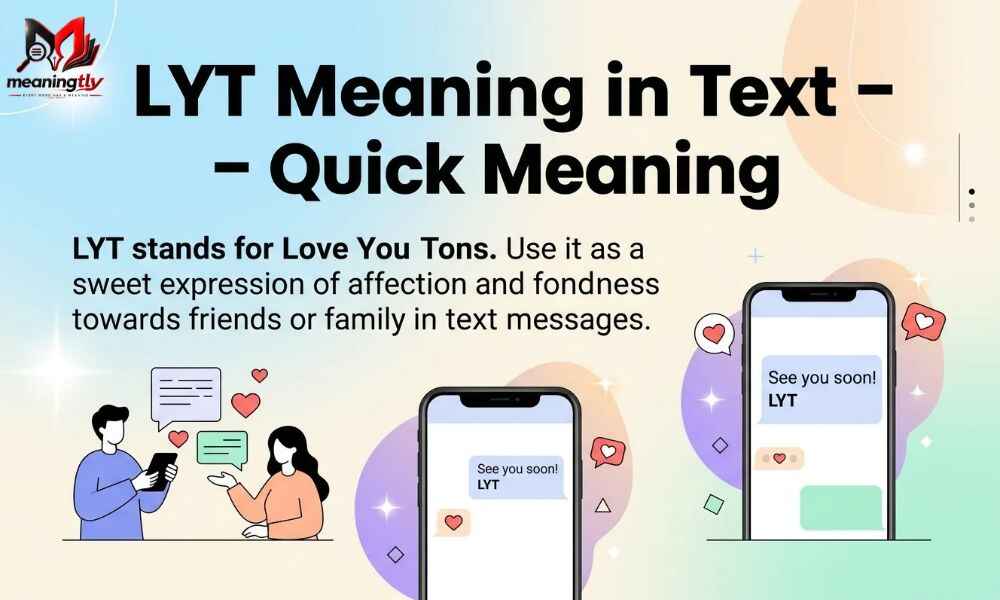
LYT stands for “Love You Too.” People type it as a quick reply when someone says “love you” first.
It is a short, soft, and friendly phrase. It saves time and keeps the chat light.
Quick Definition Table
| Term | Full Form | Tone | Common Use |
| LYT | Love You Too | Warm, casual | Replying to affection |
| ILYT | I Love You Too | Warm, direct | Replying to “I love you” |
| LY | Love You | Warm, short | Starting affection |
| ILY | I Love You | Warm, clear | Sharing love |
Simple Examples
Here are easy examples of the LYT meaning in a chat:
- Friend: “Thanks for helping me today. Love you!” You: “LYT!”
- Mom: “Take care. Love you.” You: “LYT mom.”
- Partner: “Good night, love you.” You: “LYT, sleep well.”
In each case, LYT answers a message of love. It is never the first message. It is a reply.
Why It Works
The phrase is short. It is easy to type. It feels natural on a phone.
That is why the LYT meaning spread fast. People like quick replies. They also like warm ones.
Origin & Background
Text slang grew with early mobile phones. Messages had a character limit. People cut words to fit.
“Love you” became “LY.” Then “I love you” became “ILY.” Soon, “love you too” became “LYT.”
How the Slang Grew
The shift happened in a few steps:
- SMS limits pushed people to shorten words.
- Chat apps made fast replies popular.
- Social media made short forms a habit.
- Young users spread the slang worldwide.
Timeline Table
| Stage | What Happened |
| Early SMS era | Short forms like “LY” and “ILY” appeared |
| Chat app era | Replies became faster and shorter |
| Social media era | LYT spread through DMs and comments |
| Today | Used worldwide in many languages |
Why It Stuck
Short forms feel personal. They sound like close talk. People use them with those they trust.
So the LYT meaning is tied to closeness. It is a small sign of care in a few letters.
Other Possible Meanings
Slang can change by group. Some people may use “LYT” for something else. It might be a name, a brand, or an inside joke.
Still, in texting, the main LYT meaning is “Love You Too.” Always check the chat context.
Real-Life Conversations
Examples make slang clear. Here are three common places where you may see it.
1. WhatsApp Chat
Sara: Reached home safely.
Ali: Great. Rest now. Love you.
Sara: LYT. Talk tomorrow.
The reply is short and kind. It closes the chat on a warm note.
2. Instagram DM
Hina: Your story made my day. Love you!
Zoya: Aww, LYT. You are the best.
Here, it works between friends. It feels sweet and light.
3. Text Message
Dad: Drive safe. Love you.
Bilal: LYT dad. I will text when I arrive.
This shows family use. It is polite and warm.
What These Chats Show
- LYT is a reply, not an opener.
- It fits close bonds.
- It often ends a chat softly.
- It can be paired with an emoji.
Emotional & Psychological Meaning
Words carry feelings. Short forms carry feelings too, but in a lighter way.
The LYT meaning shows care without a long speech. It says, “I feel the same.”
What It Signals
When someone types LYT, they may mean:
- “I care about you.”
- “I feel the same way.”
- “I appreciate you.”
- “I am happy you said that.”
Why Short Replies Feel Safe
Some people find big emotional words hard. A short form feels easier. It lets them share warmth without pressure.
Psychology also shows that quick replies build comfort. They keep contact steady. They show you are present.
Does It Mean Less Than “I Love You Too”?
Not always. The full phrase may feel heavier. LYT feels softer and more casual.
That does not make it fake. It just changes the tone. The feeling behind it matters most.
Emotional Tone Table
| Phrase | Emotional Weight | Best For |
| LYT | Light to medium | Friends, family, partners |
| ILYT | Medium | Partners, close family |
| “I love you too” | Strong | Serious or romantic moments |
| “Love you too ❤️” | Medium to strong | Warm, personal chats |
Usage in Different Contexts
The LYT meaning stays the same. The best use changes by place and person.
1. Social Media
On social apps, LYT is common in DMs and comments. It is quick and friendly.
Examples:
- “Love your posts!” → “LYT, thank you!”
- “You are amazing, love you.” → “LYT 💛”
Keep it light in public comments. Private DMs suit it better.
2. Friends & Relationships
With friends, LYT feels natural. It shows closeness without drama.
With partners, it can feel sweet. Many couples use it as a daily habit.
- Good morning chats
- Good night chats
- After a kind message
- After a sweet gesture
If your partner wants a deeper reply, add words. For example: “LYT, so much.”
3. Work or Professional Settings
Avoid LYT at work. It is too personal for most offices.
A boss or client may find it odd. Use clear, polite words instead.
Better options at work:
- “Thank you, I appreciate it.”
- “That means a lot.”
- “Glad to help.”
The only exception is a very close work friend. Even then, keep it private.
4. Casual vs Serious Tone
LYT fits casual talk. It does not fit heavy moments.
| Situation | Use LYT? | Why |
| Daily chat with friends | Yes | Light and natural |
| Good night text to partner | Yes | Sweet and short |
| Apology after a fight | No | Needs real words |
| Grief or bad news | No | Feels too small |
| Office email | No | Not professional |
Common Misunderstandings
Slang can confuse people. Here are the most common mistakes about the LYT meaning.
1. Assuming It’s Deeply Emotional
LYT is warm, but it is often casual. A friend who says it may not mean a deep romantic feeling.
Do not read too much into it. Look at the full chat and the person.
2. Thinking It’s Rude
Some people feel short replies are cold. That is not the case here.
LYT is a kind form. It is meant to be friendly. If you feel unsure, ask gently.
3. Using It in Serious Moments
This is the biggest mistake. Imagine someone shares sad news. Replying “LYT” may feel careless.
Serious moments need full sentences. Show that you care with real words.
Quick Myth vs Fact Table
| Myth | Fact |
| LYT is always romantic | It is often friendly or family-based |
| LYT is rude | It is a warm reply |
| LYT is only for couples | Friends and family use it too |
| LYT works everywhere | It fits casual chats best |
Variations / Types of LYT
Slang has cousins. You may see these forms around LYT.
Common Variations
| Form | Meaning | Tone |
| LYT | Love you too | Casual |
| ILYT | I love you too | Direct |
| LYT2 | Love you too (extra) | Playful |
| LYTT | Love you too, too | Cute, playful |
| LYT ❤️ | Love you too with emoji | Warm |
| LYT <3 | Love you too with heart | Sweet |
| Lyt! | Love you too, excited | Cheerful |
Style Differences
- Capital letters: “LYT” looks clear and steady.
- Small letters: “lyt” looks relaxed.
- With emoji: adds feeling.
- With a name: “LYT, Ayesha” feels personal.
Related Short Forms
You may also see these in chats:
- ILY: I love you
- LY: Love you
- ILYSM: I love you so much
- LYSM: Love you so much
- MISS U: I miss you
Knowing these helps you read chats better. It also helps you reply with the right tone.
How to Respond When Someone Uses “LYT”
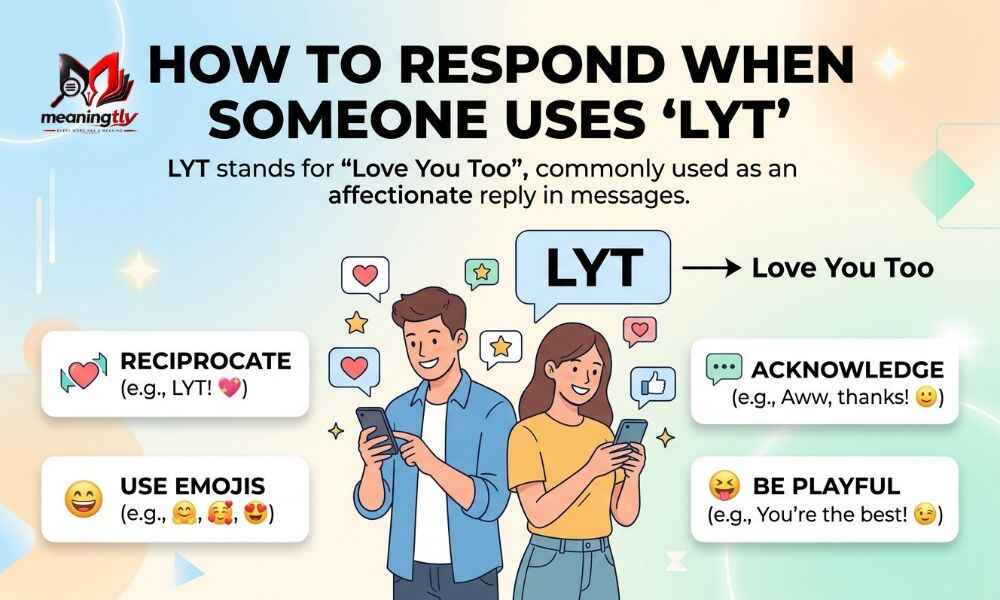
Sometimes you get an LYT message. Now you need a good reply. Here are ideas by style.
Casual Replies
Use these with friends:
- “Aww, you are the best!”
- “Thanks! Talk soon.”
- “Happy to hear that.”
- “Same here!”
Funny Replies
Use these for a playful mood:
- “LYT too, but I still want the last fry.”
- “Okay, now I am blushing.”
- “Love you three, I win.”
- “Careful, I might frame this text.”
Humor works when you know the person well. Keep it kind.
Mature / Confident Replies
Use these when you want a calm tone:
- “That means a lot to me.”
- “I feel the same. Thank you.”
- “I am glad you told me.”
- “Always here for you.”
Private or Respectful Replies
Use these when you want to stay polite:
- “Thank you. That is kind.”
- “I appreciate you.”
- “Thanks for saying that.”
This suits people you are not very close with. It keeps things safe and respectful.
Reply Guide Table
| Relationship | Best Reply Type | Example |
| Best friend | Casual or funny | “Aww, same!” |
| Partner | Warm | “Love you more 💛” |
| Parent | Respectful, warm | “Love you too, take care.” |
| Acquaintance | Private | “Thank you, that is kind.” |
| Colleague | Professional | “Thanks, I appreciate it.” |
Tips for Better Replies
- Match the other person’s tone.
- Add a name to feel personal.
- Use an emoji if you like.
- Avoid long speeches in quick chats.
- Be honest. Never fake a feeling.
Regional & Cultural Usage
Slang travels across the world. Yet culture shapes how people use it.
Western Culture
In the US, UK, and Canada, short forms are very common. People say “love you” often. It is normal among friends and family.
So the LYT meaning is easy to understand there. It is used in casual chats daily. It rarely feels awkward.
Asian Culture
In many Asian countries, open love talk can be more reserved. Families may show love by actions, not words.
Younger users online use LYT more freely. Still, many keep it for close friends or partners. Respect and privacy matter.
Middle Eastern Culture
In Middle Eastern countries, warm words are common. Family bonds are strong. People share kind phrases often.
Yet public affection can be sensitive. So people may use LYT in private chats. They may also pair it with words in their own language.
Global Internet Usage
Online, borders blur. Gamers, students, and creators use the same slang. English short forms mix with local languages.
Many users type in mixed styles. For example, they may write one line in English and one in their home language. LYT fits well in this mix.
Cultural Comparison Table
| Region | Openness to Love Talk | Typical LYT Use |
| Western | High | Friends, family, partners |
| Asian | Moderate | Close friends, private chats |
| Middle Eastern | Moderate | Private, family, close friends |
| Global online | High | DMs, comments, group chats |
A Simple Rule
Know your audience. If you are unsure, use a full sentence. It is safe in every culture.
When to Use and Avoid LYT
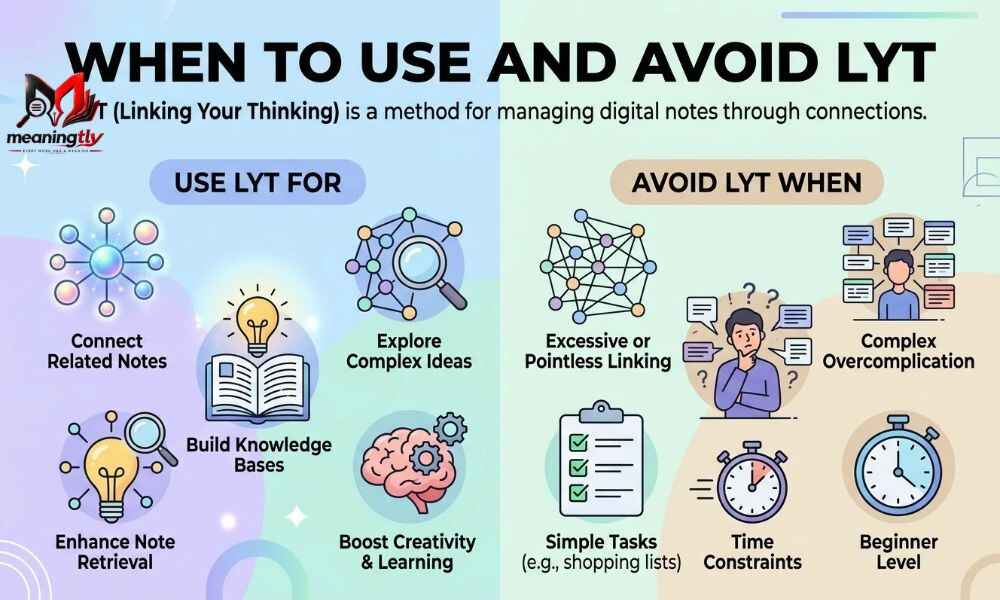
A clear guide helps you avoid mistakes. Use this checklist.
Use LYT When
- Someone says “love you” first
- The chat is casual
- You know the person well
- You want a quick, warm reply
Avoid LYT When
- The topic is serious
- You are at work
- The person may not know the slang
- Someone needs real comfort
- You feel unsure about the feeling
Pro Tips
- Read the mood before you reply.
- Do not use it as a way to avoid feelings.
- If a partner wants more, give more.
- Keep your tone kind and honest.
Tips to Write Better Texts
Short forms are fun. Yet clear writing matters too. These tips help.
- Know your reader. Older people may not know slang.
- Mix it up. Do not use only short forms.
- Add emojis with care. One is enough.
- Be sincere. Warm words land better than fast ones.
- Re-read before sending. Avoid mistakes.
Example of a Better Text
Instead of only “LYT,” try:
“LYT! Thanks for always being there. 💛”
It still feels quick. But it feels more personal.
Conclusion
LYT is a short slang term used in texts and chats. It usually means “love you too.” People type it as a quick reply to someone who said “I love you” first. It saves time and still shows real feeling.
You might see it in a message like “Love you! – LYT, have a good night.” It shows warmth without typing the full phrase. Most people write it in lowercase letters. Friends, couples, and family members all use this term.
LYT fits best in casual chats with people close to you. It works well on text, Snapchat, or Instagram DMs. It is not a good fit for formal writing or work messages. In those places, write the full phrase instead.
In the end, LYT is a simple way to return love in a message. It is fast, warm, and easy to understand. Context always helps confirm the exact meaning. When in doubt, just ask the sender what they meant.
Frequently Asked Questions
What is the full form of LYT in chat?
The full form of LYT in chat is “love you too.”
What does LYT stand for?
LYT stands for “love you too,” a quick reply to “love you.”
Does LYT mean love you too?
Yes, LYT most often means “love you too” in texts and social chats.
Is LYT romantic?
Not always. It can be romantic, but friends and family use it too.
Is LYT rude?
No. It is a friendly and warm short form. It is rude only if used at the wrong time.
What’s the difference between ILYT and LYT?
ILYT means “I love you too” and feels a bit more direct. LYT is shorter and more casual.
