Ovulating meaning an ovary releases a mature egg. It happens once in each menstrual cycle. The egg then moves into the fallopian tube. It waits there for sperm. This is the key step in getting pregnant.
Ovulation usually happens around the middle of the cycle. In a 28-day cycle, that is near day 14. But every woman is different. Stress and health can change the timing. So the day may shift from month to month.
The body gives some signs. Cervical mucus becomes clear and stretchy. Some women feel mild pain on one side. Body temperature rises slightly after ovulation. Some also notice a stronger desire for intimacy.
The egg lives for only 12 to 24 hours. Sperm can live up to five days. So the fertile window is about six days. Tracking your cycle can help you plan. Ovulation kits and apps can make it easier.
Ovulating Meaning
Ovulating Meaning in Simple Words
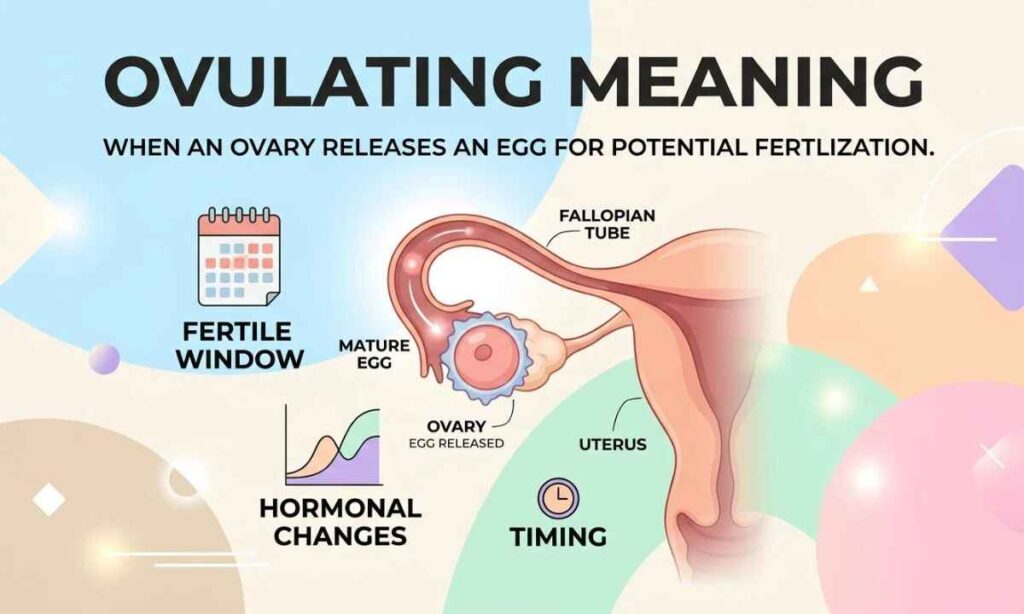
Ovulating meaning comes down to one event. A ripe egg leaves the ovary and enters the fallopian tube. From there, it waits to meet a sperm.
Quick Definition
Ovulating meaning is the release of an egg from the ovary. It happens once in most cycles. A surge of luteinizing hormone (LH) triggers it.
So when someone says “I’m ovulating,” they mean the egg is out. The body is at its most fertile.
Ovulation vs. Period
These two are often mixed up. They are not the same thing.
- Ovulation: the release of an egg, mid-cycle.
- Period: the shedding of the uterine lining, at the cycle’s start.
A period happens when no pregnancy occurs. Ovulation happens about two weeks before that.
Ovulation vs. Fertile Window
The fertile window is wider than ovulating meaning itself. It lasts about six days. It includes the five days before ovulation and the day of ovulation.
Why so long? Sperm can survive in the body for up to five days. The egg lives only 12 to 24 hours.
So you can get pregnant before the egg is even released. Knowing this changes how you time things.
Menstrual Cycle Basics
You cannot grasp the Ovulating meaning without the full cycle. Ovulation is just one part of it.
Cycle Length
A cycle starts on day one of your period. It ends the day before your next period starts. Most cycles last 21 to 35 days. The average is about 28 days.
The Four Phases
| Phase | Typical Timing | What Happens |
| Menstrual | Days 1–5 | The uterine lining sheds. You bleed. |
| Follicular | Days 1–13 | Follicles grow. Estrogen rises. |
| Ovulation | Around day 14 | LH surges. The egg is released. |
| Luteal | Days 15–28 | Progesterone rises. The lining thickens. |
The follicular phase changes in length from person to person. The luteal phase stays more steady. It usually lasts 12 to 14 days.
What Happens in Your Body
Ovulation is not just one moment. It is a chain of steps. Hormones guide each one.
The Follicular Build-Up
Early in your cycle, the brain sends out follicle-stimulating hormone (FSH). It wakes up several follicles in the ovaries. Each follicle holds an immature egg.
Usually, one follicle becomes dominant. The others fade away.
The Estrogen Rise
The dominant follicle makes more estrogen. Estrogen thickens the uterine lining. It also thins the cervical mucus so sperm can swim through.
The LH Surge
When estrogen peaks, the brain releases a big burst of LH. This is the trigger. Ovulation meaning usually follows within 24 to 36 hours.
The Egg Release
The follicle ruptures. The egg is freed. The finger-like ends of the fallopian tube sweep it in.
After the Release
The empty follicle becomes the corpus luteum. It makes progesterone. This hormone prepares the womb for a possible pregnancy.
If the egg is not fertilized, the corpus luteum breaks down. Hormone levels drop. Your period begins.
How Long Does Ovulation Last?
The egg release itself is quick. The egg survives about 12 to 24 hours after release. After that, it can no longer be fertilized.
The surrounding fertile days last longer. That is why we talk about a window, not a moment.
When Do You Ovulate?
Many people think ovulation always falls on day 14. That is only true for a textbook 28-day cycle. Real bodies vary.
The Rule of Thumb
Ovulation meaning usually happens 12 to 14 days before your next period. Count backward from your expected period date. This works better than counting forward from day one.
Ovulation by Cycle Length
| Cycle Length | Likely Ovulation Day |
| 24 days | Around day 10–12 |
| 28 days | Around day 14 |
| 32 days | Around day 18 |
| 35 days | Around day 21 |
These are estimates. Your own pattern may differ.
Does the Day Change?
Yes, it can. Stress, illness, travel, and sleep shifts can all move it. You may ovulate on a different day each month.
That is normal. It is also why guessing is risky.
Your Fertile Window Explained
Knowing the ovulating meaning is step one. Finding your fertile window is step two.
The Six-Day Rule
The window covers six days. It ends on ovulation day. The two days just before ovulation are the most fertile.
Why Sperm Lifespan Matters
Sperm can wait in the fallopian tubes for up to five days. When the egg arrives, they are ready. This is why sex before ovulation can lead to pregnancy.
The Odds Across the Window
Chances rise as ovulation nears. They peak in the two days before the egg is released. They drop sharply once the egg is gone.
Signs You Are Ovulating
Not everyone feels ovulation. Some people notice many signs. Others notice none.
Body signs are helpful clues. They are not proof. Use them alongside other tracking tools.
Cervical Mucus Changes
This is the most reliable body sign. Near ovulation, mucus turns clear and slippery. It looks like raw egg white. You can stretch it between your fingers.
After ovulation, it becomes thick or dry again.
Basal Body Temperature Rise
Basal body temperature (BBT) is your temperature at full rest. After ovulation, progesterone raises it slightly. The rise is about 0.3 to 0.6°C (0.5 to 1°F).
The catch? BBT confirms ovulation after it has happened. It does not predict it.
Ovulation Pain
Some people feel a twinge on one side of the lower belly. This is called mittelschmerz, German for “middle pain.”
It may feel like a dull ache or a sharp pinch. It usually lasts a few hours. Sometimes it lasts a day or two.
Higher Libido
Hormones can boost sexual desire around ovulation. Many people notice it. It is nature’s way of nudging you toward the fertile days.
Breast Tenderness
Rising hormones can make breasts sore or full. This may start around ovulation. It can last into the luteal phase.
Light Spotting
A few people see light pink or brown spotting. It happens because of the quick hormone shift. It is usually harmless and brief.
Other Possible Signs
- Mild bloating
- A sharper sense of smell or taste
- A softer, higher, more open cervix
- Slight increase in vaginal discharge
- Better mood or energy for some people
Signs at a Glance
| Sign | When You Notice It | Reliability |
| Egg-white mucus | Before ovulation | High |
| BBT rise | After ovulation | High (for confirming) |
| LH surge on a test | 1–2 days before | High |
| Ovulation pain | Around ovulation | Medium |
| Libido boost | Before and during | Low |
| Breast tenderness | Around and after | Low |
How to Track Ovulating Meaning
You have many options. Some are free. Some cost money. Pick what fits your life.
The Calendar Method
Record your cycle length for six to twelve months. Find your shortest and longest cycles. Subtract 18 from the shortest. Subtract 11 from the longest. This gives you an estimated fertile window.
It is cheap. It is also the least precise, especially if your cycles vary.
Charting Basal Body Temperature
Take your temperature every morning before getting up. Use the same thermometer. Write it down or log it in an app.
After a few months, a pattern will appear. You will see when your temperature usually jumps.
Watching Cervical Mucus
Check your mucus each day. Note the color and texture. Log it with your temperature.
When it turns clear and stretchy, your fertile window has likely opened.
Ovulation Predictor Kits
These are urine strips that detect the LH surge. A positive result means ovulation is likely within the next 12 to 36 hours.
Use them from a few days before your expected ovulation. Test at the same time each day.
Fertility Apps
Apps use your logged data to predict your window. Some sync with wearables. They are handy, but they work from averages.
Treat predictions as estimates. Pair them with a body sign or a test.
Fertility Monitors and Wearables
Some devices track hormones in urine. Others read skin temperature or heart rate overnight. They can show a longer fertile window than basic strips.
They cost more. They suit people who want detailed data.
Ultrasound Tracking
A doctor can watch your follicles grow on a scan. This is the most precise method. It is usually used in fertility treatment.
Comparing the Methods
| Method | Cost | Predicts or Confirms | Ease |
| Calendar | Free | Predicts (roughly) | Easy |
| BBT chart | Low | Confirms | Medium |
| Cervical mucus | Free | Predicts | Medium |
| LH strips | Low–Medium | Predicts | Easy |
| Wearables/monitors | High | Both | Easy |
| Ultrasound | High | Both | Needs a clinic |
Combine Two Methods
No single tool is perfect. Using two gives a clearer picture. For example, pair LH strips with cervical mucus checks.
Tracking Mistakes to Avoid
Even careful trackers slip up. Here are the common errors.
Testing at the Wrong Time
Starting LH strips too late can mean you miss the surge. Begin a few days before your expected ovulation. If your cycles vary, start earlier.
Taking BBT Inconsistently
Sleeping in, drinking alcohol, or being sick can skew readings. Take your temperature at the same time each morning. Note anything unusual in your log.
Trusting One Sign Alone
One sign can mislead you. Pain, for example, can have other causes. Always cross-check with a second method.
Relying Only on App Predictions
Apps assume a pattern. Your body may not follow it. Use the app as a guide, not a rule.
Giving Up Too Soon
Tracking takes practice. Most people need two or three cycles to see a clear pattern. Stay patient.
Ovulating and Getting Pregnant
For many, the ovulating meaning matters most when trying to conceive. Timing is everything.
The Best Days to Try
The two days before ovulation and ovulation day itself are the best. Chances are highest in this stretch.
How Often to Have Sex
You only need one well-timed act to conceive. But more helps. Many doctors suggest sex every day or every other day during the fertile window.
There is no need to stress. A relaxed routine works well.
Simple Timing Tips
- Track your cycle for a few months first.
- Start testing a few days before your expected ovulation.
- Have sex when mucus turns clear and slippery.
- Keep going until a day or two after the LH surge.
- Take a pregnancy test if your period is late.
What Comes After Ovulation
If the egg is fertilized, it travels toward the womb. It implants about 6 to 12 days after ovulation. Pregnancy hormone (hCG) then starts rising.
Testing too early can give a false negative. Wait until your period is due for the best result.
Ovulating and Avoiding Pregnancy
The same knowledge can help you avoid pregnancy. But it is far less reliable than other methods.
Why Guessing Is Risky
Ovulating meaning can shift. Sperm can live for days. A “safe” day may not be safe at all.
Fertility awareness methods work only with strict, careful tracking. Even then, they fail more often than hormonal methods, condoms, or IUDs.
Better Options
Talk to a doctor about birth control. Ask which method fits your health and goals.
Ovulation in Special Situations
Your life stage affects ovulation. Here are the common ones.
After a Period Starts
Ovulation does not happen during your period in most cases. But in short cycles, it can come soon after bleeding ends. So pregnancy is still possible.
On Birth Control Pills
Most hormonal pills stop ovulation. No egg is released. That is how they prevent pregnancy.
After you stop the pill, ovulating meaning usually returns within a few weeks to months.
After Giving Birth
Ovulation can return before your first period. This surprises many people. You can become fertile again without warning.
Breastfeeding may delay ovulation. It is not a dependable form of birth control.
During Perimenopause
As menopause nears, cycles get erratic. Ovulating meaning becomes less regular. Some months, no egg is released.
You may still ovulating meaning occasionally. Pregnancy is still possible until menopause is confirmed.
In Teens
Cycles can be irregular in the first few years after periods begin. Ovulation may not happen every month. This usually settles with time.
Ovulation and Age
Age shapes both ovulation and egg quality. Here is how.
In Your 20s
Cycles are often regular. Egg numbers and quality are at their peak. Fertility is generally highest in this decade.
In Your 30s
Fertility begins a gradual decline. Ovulating meaning still happens regularly for most. Egg quality starts to dip, especially after 35.
In Your 40s
Cycles may shorten or skip. Anovulatory cycles become more common. Conceiving naturally gets harder, though it is still possible.
Age Overview
| Age Range | Ovulation Pattern | Fertility Trend |
| Teens | Often irregular at first | Rising |
| 20s | Usually regular | Peak |
| 30s | Mostly regular | Gradual decline |
| 40s | Less predictable | Lower |
When Ovulation Does Not Happen
Missing ovulating meaning is called anovulation. It can occur now and then. If it is frequent, it needs attention.
Signs of Irregular Ovulation
- Periods that come less than 21 or more than 35 days apart
- Missed periods
- Very light or very heavy bleeding
- No sign of fertile mucus
- No BBT rise
- Trouble conceiving
Common Causes
- Polycystic ovary syndrome (PCOS)
- Thyroid problems
- High prolactin levels
- Very low or very high body weight
- Intense exercise
- Chronic stress
- Premature ovarian insufficiency
- Some medicines
PCOS and Ovulation
PCOS is a top cause of irregular ovulation. Hormone imbalance stops follicles from maturing. Common signs include irregular periods, acne, and excess hair growth.
It is treatable. Lifestyle changes and medicine often restore ovulation.
Stress and Ovulation
Stress hormones can disrupt the signals from the brain to the ovaries. This can delay or block ovulation. A calmer routine often helps.
When to See a Doctor
Seek medical advice if you notice any of these:
- You have no period for three months or more
- Your cycles are always irregular
- You have severe pelvic pain
- You are under 35 and have tried to conceive for 12 months
- You are 35 or older and have tried for six months
- You suspect PCOS or a thyroid problem
Early checks can save time. A doctor can run blood tests and scans to find the cause.
WS Meaning: Complete Definition, Uses & Examples (2026)
Tips for Healthy Ovulating Meaning
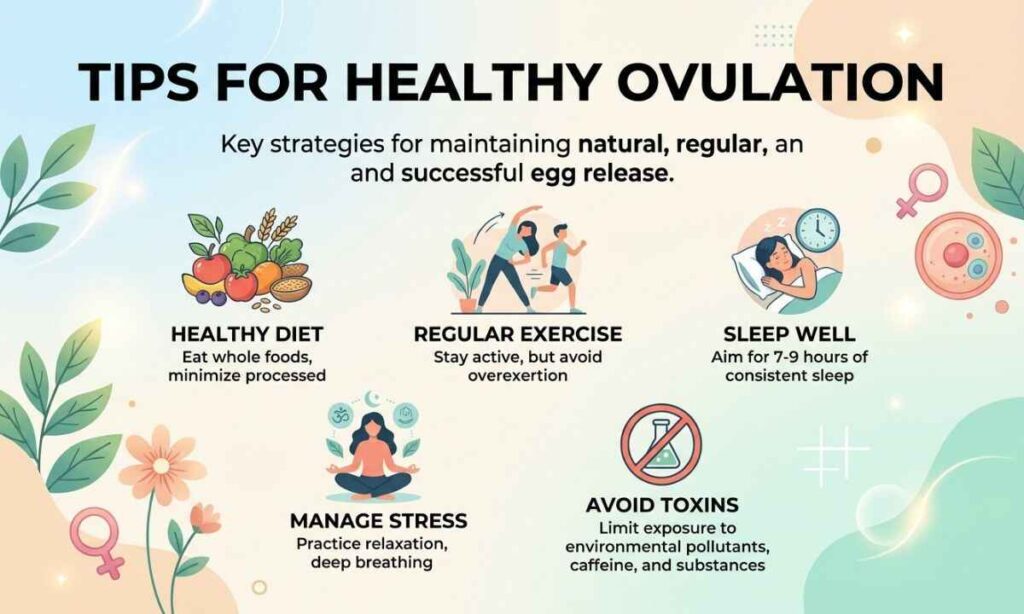
Small habits support your hormones. They will not guarantee ovulation, but they help.
Eat Balanced Meals
Include whole grains, lean protein, healthy fats, fruits, and vegetables. Avoid crash diets. Your body needs enough fuel to ovulate.
Keep a Healthy Weight
Being very under or over weight can disturb hormones. Aim for a weight that feels healthy for you. A doctor can guide you.
Exercise Moderately
Regular movement is good. Extreme training can stop periods and ovulation. Balance is the goal.
Manage Stress
Try walking, deep breathing, yoga, or journaling. Pick something you will actually do.
Sleep Well
Poor sleep affects hormones. Aim for seven to nine hours each night.
Avoid Smoking and Limit Alcohol
Both can harm egg quality and hormone balance. Cutting back supports fertility.
Take Prenatal Folic Acid
If you plan to conceive, ask your doctor about folic acid. It supports early pregnancy health.
Foods That Support Ovulation
No single food triggers ovulation. But a steady, nutrient-rich diet helps your hormones work well.
Healthy Fats
Hormones are built from fats. Add olive oil, nuts, seeds, and oily fish.
Fiber and Whole Grains
Fiber helps keep blood sugar steady. Stable blood sugar supports hormone balance. Choose oats, brown rice, and legumes.
Iron-Rich Foods
Low iron can affect energy and cycles. Eat leafy greens, lentils, and lean meat.
Plenty of Water
Stay hydrated through the day. Good hydration supports healthy cervical mucus.
Foods to Limit
- Highly processed snacks
- Sugary drinks
- Excess caffeine
- Trans fats
Common Myths About Ovulation
Wrong ideas can lead to bad timing. Here are the facts.
| Myth | Fact |
| Everyone ovulates on day 14. | The day varies with cycle length. |
| You can only conceive on ovulation day. | You can conceive in the six-day window. |
| You always feel ovulation. | Many people feel nothing. |
| You cannot get pregnant on your period. | It is unlikely, but possible in short cycles. |
| Regular periods mean you always ovulate. | Some regular cycles are anovulatory. |
| Apps are always accurate. | Apps estimate. They can be off. |
Ovulating Meaning in Everyday Talk
You may hear the term in many places. Here is how people use it.
In Health Class and Clinics
Doctors use it to describe egg release. It is a medical term for a specific event.
In Fertility Journeys
Couples say “I’m ovulating” to mean the fertile time is here. It signals when to try for a baby.
On Social Media and Apps
The phrase often stands for the entire fertile phase. Technically, ovulating meaning is just the egg release. But the casual use is common.
Knowing the ovulating meaning in each setting helps you read advice clearly.
Why Understanding Ovulation Helps
Ovulation is more than a baby-making step. It is a sign of overall hormone health.
A Window Into Your Health
Regular ovulation suggests your hormones are in good balance. Irregular ovulation can point to issues worth checking.
Better Cycle Awareness
Tracking helps you predict your period. It helps you notice patterns in mood, energy, and skin. You can plan your life with more confidence.
Empowered Decisions
Whether you want to conceive or simply know your body, this knowledge is useful. You can talk to your doctor with clear facts.
ALR Meaning: Complete Guide to Its Use, Slang & Examples (2026)
Quick Recap
Let’s pull the key points together.
- Ovulating meaning: the release of an egg from the ovary.
- It usually happens 12 to 14 days before your next period.
- The egg lives 12 to 24 hours.
- The fertile window lasts about six days.
- Signs include egg-white mucus, a BBT rise, and mild one-sided pain.
- LH strips predict ovulation. BBT confirms it.
- Irregular ovulation can have treatable causes.
- Guessing is not a safe way to avoid pregnancy.
Conclusion
Ovulating means an egg leaves the ovary. This happens once in each cycle. The egg then moves into the fallopian tube. It stays ready for about one day. This is the key step for pregnancy.
Ovulating meaning usually happens around the middle of the cycle. For many women, it is near day 14. But cycles differ from person to person. Stress and illness can shift the timing. So the day may change each month.
The body gives small signs. You may see clear, stretchy discharge. Some women feel mild pain on one side. Others notice higher desire or light spotting. Not everyone feels these signs.
Knowing your ovulation helps in many ways. It helps you plan or avoid pregnancy. Track your cycle with an app or a calendar. Ovulation kits can also help. See a doctor if your periods are very irregular.
FAQs About Ovulating Meaning
What is the ovulating meaning in simple terms?
It means an ovary releases a mature egg. This is the time you are most fertile.
What does it mean when a woman is ovulating?
Her body has released an egg that can be fertilized. Pregnancy is possible during this time.
How many days does ovulation last?
The egg release is brief, and the egg lives 12 to 24 hours. The fertile window lasts about six days.
Can you get pregnant on the day you ovulate?
Yes. Ovulation day is one of your most fertile days.
How do I know I’m ovulating?
Look for clear, stretchy mucus, mild one-sided pain, and a positive LH test. A BBT rise confirms it afterward.
Do you ovulate right after your period?
Not usually. But with short cycles, ovulation can come soon after bleeding stops.
Can you ovulate without a period?
Yes. Ovulation can occur before your first period after birth or during irregular cycles.
Can you have a period without ovulating?
Yes. Some cycles are anovulatory. You may still bleed, but no egg was released.
Does ovulation cause pain?
Some people feel mild pain called mittelschmerz. Many feel nothing at all.
What is the best time to get pregnant?
The two days before ovulation and ovulation day itself. Chances are highest then.
Can stress delay ovulation?
Yes. High stress can shift or block ovulation. Managing stress may help.
Do ovulation tests work for everyone?
They work for most people. They can mislead those with PCOS, since LH may stay high.
How soon after ovulation can I take a pregnancy test?
Wait at least 12 to 14 days after ovulation. Testing earlier may give a false negative.
Can you ovulate twice in one cycle?
You can release more than one egg in a single 24-hour window. That is how fraternal twins happen. Releasing eggs days apart in one cycle is very rare.
When should I see a doctor about ovulation?
See one if your periods are very irregular or absent. Also go if you’ve tried to conceive for 6 to 12 months, depending on your age.

1 thought on “Ovulating Meaning: Best Definition, Signs, and How It Works(2026)”