BPM stands for “beats per minute.” It is a simple way to measure speed or rhythm. You hear this term in music, fitness, and health. It tells you how fast something repeats in one minute.
In music, BPM shows how fast a song is. A slow song might have 60 BPM. A fast song can reach 140 BPM or more. DJs and producers use BPM to match songs together smoothly.
BPM is also used for heart rate. Your heart beats a certain number of times each minute. A normal resting heart rate is about 60 to 100 BPM. Doctors and fitness trackers use this number to check your health.
Gamers and fitness apps use BPM too. Workout playlists are often picked by BPM to match your pace. Running apps may track your heart rate in BPM during exercise. Knowing your BPM helps you train smarter and stay safe.
BPM Meaning
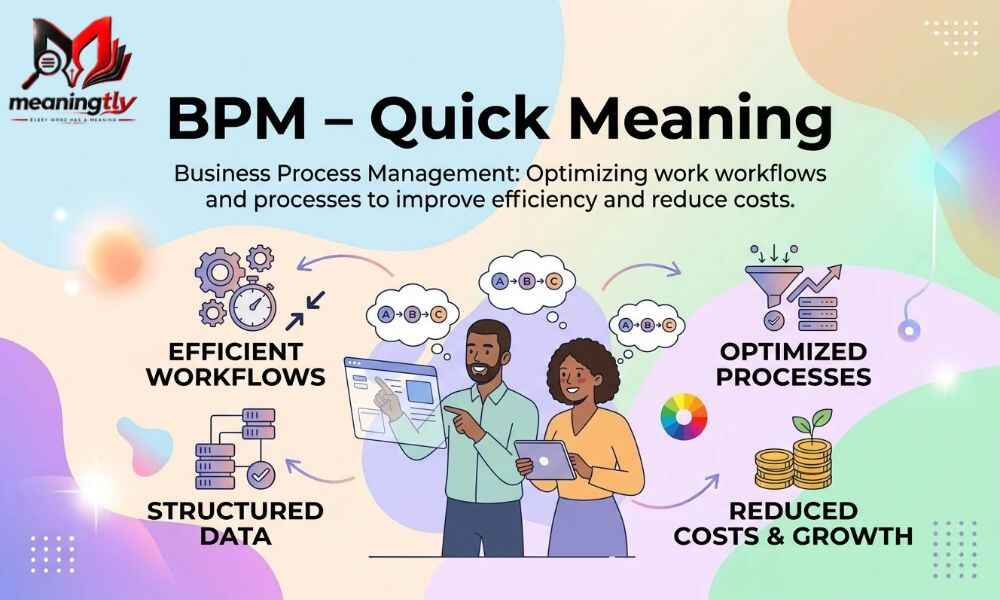
BPM – Quick Meaning
The short answer comes first. Most people searching for the bpm meaning want one quick line. Here it is.
Most Common Definitions
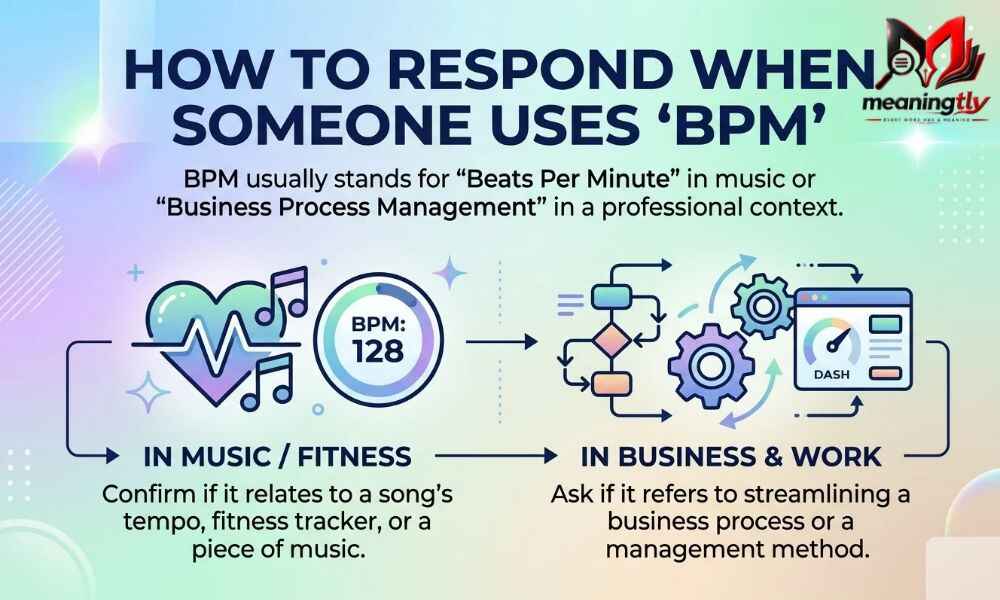
BPM has a few full forms. The two main ones are Beats Per Minute and Business Process Management. A third one is used in postal jobs in India: Branch Postmaster.
| Full Form | Field | What It Measures or Means |
| Beats Per Minute | Music | Speed (tempo) of a song |
| Beats Per Minute | Health | Heart rate |
| Business Process Management | Business / IT | A method to improve workflows |
| Branch Postmaster | Postal jobs | A rural post office role |
Beats Per Minute is the most popular meaning. Business Process Management comes next. The rest are rare.
Simple Definition
BPM means “beats per minute.” It counts how many beats happen in 60 seconds. A beat can be a drum hit or a heartbeat.
Think of tapping your foot to a song. Count the taps for one minute. That number is the BPM.
So the basic bpm meaning is a speed count. Higher numbers mean faster. Lower numbers mean slower.
Example Quotes
Here are some simple lines that show BPM in daily use:
- “This song runs at 120 BPM.”
- “My heart hit 150 BPM after the sprint.”
- “Our team adopted BPM software to cut delays.”
- “Set the playlist to 140 BPM for the gym.”
- “Her resting BPM is 58 because she runs daily.”
Each line uses the same word. But the meaning shifts with the topic.
Origin & Background
The word has a long road behind it. It started in music. Then it moved into medicine and the digital world. Business picked it up later.
Musical Roots
Musicians needed a way to share speed. Old sheet music used words like “slow” or “lively.” These words were vague.
Then the metronome arrived in the early 1800s. It clicked at a fixed rate. Composers could now write exact numbers. A mark like “60” meant one beat per second.
That gave us the music version of the bpm meaning. It is a clear, shared number for tempo. Today, every DJ app and music tool uses it.
Medical Adoption
Doctors had always checked the pulse. They counted beats by hand against a clock. The unit “beats per minute” was a natural fit.
It was short and easy to say. Nurses wrote it on charts. Doctors used it in reports. Later, machines showed it on screens.
Now, smartwatches show BPM in real time. The same unit is used from hospitals to home gadgets. This is why the health meaning is so common.
Digital & Internet Expansion
The internet made BPM everyday talk. Music apps let users search songs by tempo. Fitness apps began tracking heart rate.
Then came short video apps. Creators shared “BPM” lists for dance clips. Gamers used it for rhythm games. Producers shared beats online with the BPM in the title.
The bpm meaning also spread through slang. People now use it to describe energy or mood. A “high BPM day” can mean a busy and fast day.
Business & Corporate Use
Business has its own BPM. It stands for Business Process Management. It is a method that helps companies manage and improve how their work gets done.
It has nothing to do with beats. It deals with steps, tasks, and workflows. Think of how an invoice moves from request to payment.
Companies use BPM tools to find delays. They then fix them. This meaning is common in IT, banking, and call center jobs.
Real-Life Conversations
Let’s see how the bpm meaning shows up in real chats. These samples are short and natural.
WhatsApp Chat
Sara: Which song are you using for the reel?
Ali: The one at 128 BPM. It matches my steps.
Sara: Nice. Send me the link.
Here, BPM means song tempo. The tone is casual and quick.
Instagram DM
Maya: Your story track is so good!
Zain: Thanks! It’s 100 BPM. Chill and smooth.
Maya: Perfect for sunset clips.
BPM is used here as a quick music detail. It helps people pick a vibe.
TikTok Comments
- “What’s the BPM of this sound?”
- “Around 130. Great for dance edits.”
- “Slow it down to 90 BPM for a softer feel.”
- “My heart rate hit 160 BPM doing this challenge 😂”
Comments on TikTok are fast. People mix music and fitness meanings in one thread.
Text Messages
Dad: How was your run?
You: Good. Average 155 BPM. I felt strong.
Dad: Keep it under 170, okay?
In this case, BPM means heart rate. The message is simple and caring.
Emotional & Psychological Meaning
BPM is not just a number. It shapes how we feel. Speed in sound and speed in the body both affect mood.
Music & Mood Connection
Fast songs lift energy. Slow songs calm the mind. This is why gyms play fast tracks.
Here is a simple guide:
| BPM Range | Common Feel | Typical Use |
| 60–80 | Calm, soft | Sleep, relaxing |
| 80–100 | Warm, easy | Chill, background music |
| 100–130 | Upbeat, happy | Pop, daily playlists |
| 130–160 | Intense, driving | Workouts, dance |
| 160–180+ | Wild, fast | Drum and bass, sprints |
The bpm meaning in music is closely tied to emotion. People pick songs by feeling. Tempo is a big part of that feeling.
Heartbeat & Emotion
Your heart reacts to emotion. Fear, joy, and excitement raise your BPM. Rest and calm lower it.
Think of a big exam day. Your heart beats faster. Now think of a quiet night. Your pulse slows down.
This link is why people say “my heart is racing.” It is a real body signal. BPM turns that feeling into a number.
Psychological Identity
Some people tie BPM to who they are. A runner may say, “I’m a 170 BPM person.” A musician may say, “I live at 90 BPM.”
It becomes a personal rhythm. It shows how they move and think. Fast people feel at home in fast tempos. Calm people lean toward slow ones.
This is not science. It is a fun way to describe your style. Still, it shows how deeply the bpm meaning touches daily life.
Usage in Different Contexts
The same word changes tone by place. Let’s look at the main settings.
Social Media
On social apps, BPM is mostly about music. Creators add it to captions. Dancers use it to pick sounds.
Fitness posts also use it. People share heart rate screenshots from watches. Hashtags like #bpm help others find similar content.
Keep it short on social media. A number plus a vibe is enough. Example: “Late night drive, 95 BPM.”
Friends & Relationships
Friends use BPM in light talk. “This playlist is 140 BPM. Let’s go!” It feels fun.
In romance, people joke about heartbeat. “You raise my BPM.” This is a cute line. It means someone makes the heart race.
Use it with people who get the joke. It can sound cheesy to others. A smile emoji helps.
Work & Professional Settings
At work, BPM often means Business Process Management. You may hear it in meetings. “We need a BPM tool for approvals.”
Health workers use BPM for pulse. “Patient is at 88 BPM.” It is clear and exact.
Be careful in office chat. Add the full form the first time. This avoids confusion.
Casual vs Serious Tone
Casual use is loose and playful. Serious use is exact and clear.
| Tone | Example | Meaning |
| Casual | “That beat is a mood, 110 BPM.” | Music vibe |
| Casual | “You make my BPM go up.” | Flirty joke |
| Serious | “Resting rate: 72 BPM.” | Medical reading |
| Serious | “Deploy BPM across finance.” | Business system |
Match your tone to the room. This keeps your message easy to follow.
Common Misunderstandings
Many people get the bpm meaning slightly wrong. Here are the top mistakes.
Thinking BPM Only Means Music
Music is the most known use. But it is not the only one. Health and business use it too.
Always check the topic. If the text mentions heart or pulse, it is health. If it mentions workflow or software, it is business.
Confusing High BPM as Always Bad
A high BPM is not always a problem. Your heart rises during exercise. That is normal and healthy.
It becomes a concern when it stays high at rest. Or when it comes with pain or dizziness. In that case, speak to a doctor.
For music, high BPM is simply fast. It is not good or bad. It depends on the goal.
Assuming All Songs Need High BPM
Some people think fast means better. That is not true. Many hit songs sit at 80 to 110 BPM.
Slow songs can be deep and strong. They suit love songs, study music, and sleep tracks. Tempo should match purpose.
Using BPM in Wrong Context
Mixing meanings can confuse people. Saying “my BPM is high” to a music producer sounds odd. They may think you mean a song.
Add a small hint. Say “my heart BPM” or “the track’s BPM.” It takes two seconds. It saves a lot of confusion.
Comparison Table
This table compares the main meanings of the bpm meaning side by side.
| Feature | Music BPM | Heart BPM | Business BPM |
| Full form | Beats Per Minute | Beats Per Minute | Business Process Management |
| What it shows | Song speed | Pulse rate | Workflow quality |
| Typical range | 60–180+ | 60–100 at rest | Not a number |
| Used by | DJs, producers | Doctors, athletes | Managers, IT teams |
| Tool | Metronome, DJ app | Smartwatch, pulse check | BPM software |
| Goal | Set the mood | Track health | Save time and cost |
A normal resting heart rate for adults generally falls between 60 and 100 beats per minute. Music tempo has no such “normal.” It depends on the genre.
Variations / Types of BPM
BPM has many forms in daily life. Here are ten useful ones.
Resting BPM
This is your pulse when you are calm. You should be seated or lying down. Check it in the morning for the best result.
Most adults fall between 60 and 100. Fit people often sit lower. Some competitive athletes have resting rates around 40 BPM.
Active BPM
This is your heart rate during movement. It rises as effort rises. Walking gives a mild rise. Sprinting gives a big one.
Active BPM shows how hard your body works. It helps you avoid overtraining.
Target BPM
This is the heart rate you aim for in a workout. A common method uses age. Max heart rate is roughly 220 minus your age.
Then you aim for a share of that number. Many plans use 50 to 85 percent. Your trainer can adjust it for you.
Song BPM
This is the tempo of a track. Here are rough ranges by genre:
| Genre | Typical BPM |
| Hip-hop | 80–110 |
| Pop | 100–130 |
| House | 120–130 |
| Techno | 125–150 |
| Rock | 110–140 |
| Drum and bass | 160–180 |
These are guides, not rules. Songs can break them.
Dance BPM
Dancers pick tempo by style. A slow dance may sit near 70 to 90 BPM. Salsa often runs faster. Hip-hop dance fits mid tempos.
Beginners do better with slower tracks. They can learn steps without stress. Speed can rise as skill grows.
DJ Transition BPM
DJs match tempo when they switch songs. This keeps the beat smooth. A jump from 120 to 128 BPM is easy to blend.
Big jumps feel sharp. DJs then use a break or a drop to hide the change. Matching BPM is a core DJ skill.
Meditation BPM
Calm music helps meditation. Many tracks sit near 50 to 70 BPM. This is close to a relaxed pulse.
Slow breathing also lowers heart rate. Pair it with soft sound for deeper calm. Even five minutes can help.
Running BPM
Runners use two numbers. One is heart rate. The other is music tempo.
Many runners like songs between 140 and 180 BPM. This often matches running step rhythm. Heart rate zones guide effort. Keep both in mind for a smooth run.
Business BPM
This is Business Process Management. It maps steps in a task. Then it finds slow parts and fixes them.
A simple example is leave approval. Without BPM, emails get lost. With BPM, the request moves by clear steps. Everyone sees the status.
Gaming BPM
Rhythm games use BPM to set difficulty. Fast tracks need quick reflexes. Slow tracks suit new players.
Gamers also talk about heart rate during intense matches. A close finish can raise BPM fast. Some streamers even show a live pulse on screen.
How to Respond When Someone Uses “BPM”
Replies depend on the setting. Here are easy options.
Casual Replies
- “Nice! What’s the BPM?”
- “That tempo sounds perfect.”
- “Send it over, I’d love to hear it.”
- “Cool, I’ll try that pace today.”
These keep the chat light and friendly.
Funny Replies
- “My BPM just jumped reading that.”
- “Hold on, my heart is at 180 BPM.”
- “That beat has a higher BPM than my morning.”
- “I need a slower BPM for Mondays.”
Humor works best with close friends.
Mature / Confident Replies
- “Good tempo. It fits the mood well.”
- “That heart rate looks healthy for training.”
- “Let’s apply BPM to speed up approvals.”
- “I’ll review the numbers and share feedback.”
These sound calm and clear. They fit work or serious talks.
Private / Respectful Replies
When health is the topic, be gentle. Heart rate can be personal.
- “Thanks for sharing. Take care of yourself.”
- “Hope you feel better soon.”
- “Let me know if you need anything.”
- “Maybe check with your doctor to be safe.”
Do not push for details. Let the person lead.
Regional & Cultural Usage
The bpm meaning is global. But how people use it differs a little by region.
Western Culture
In the US and Europe, BPM is common in music and fitness. DJs, gym coaches, and app users all know it. Business teams also use the term often.
Festival culture loves tempo talk. Playlists are built by BPM. Many people casually quote it in chats.
Asian Culture
In Asia, BPM is popular in gaming and pop music. Rhythm games use it widely. K-pop and J-pop fans often discuss tempo.
The business meaning is strong too. IT and BPO sectors use Business Process Management daily. In India, the postal meaning also appears in job ads.
Middle Eastern Culture
BPM is mostly known through fitness and health here. Smartwatches and gyms have made it common. Music producers also use it.
Business use grows with digital growth. Banks and telecom firms use process tools. Many people mix English terms into local talk.
Global Internet Usage
Online, the term is nearly the same everywhere. Short video apps spread it fast. A tempo number needs no translation.
Memes also play with it. “My BPM when the crush texts” is a common style. This keeps the bpm meaning alive in pop culture.
Conclusion
BPM stands for “beats per minute.” It is a way to measure how fast or slow a piece of music is. The term shows up in songs, workout apps, and music software. It helps people understand the speed of a beat. Musicians and DJs use it every day.
A high BPM means the song is fast. Dance and electronic tracks often sit between 120 and 140 BPM. A low BPM means the song is slow. Ballads and lullabies can drop below 70 BPM. The number tells you the energy level before you even press play.
BPM also matters outside of music. Doctors use it to measure heart rate. A normal resting heart rate is about 60 to 100 BPM. Runners check their BPM to track effort during a workout. The term crosses over from music into health and fitness.
In short, BPM is a simple but useful measurement. It tells you the tempo of a song or the rhythm of a heartbeat. Whether you are mixing music or checking your pulse, BPM gives you a clear number. It is a small term with a big role in daily life.
FAQs
What does BPM mean in music?
It means beats per minute. It shows how fast a song is. For example, 120 BPM means 120 beats each minute.
What is a normal heart BPM?
A normal resting heart rate for most adults is 60 to 100 BPM. Fit people may be lower.
Is higher BPM better for workouts?
Not always. A higher BPM means harder effort. Stay in your target zone to train safely.
What does BPM mean in business?
It means Business Process Management. It helps companies improve and automate how work flows.
Can BPM measure stress?
It can hint at stress. Stress often raises heart rate. But BPM alone cannot confirm stress.
What BPM is best for running?
For music, many runners like 140 to 180 BPM. For heart rate, it depends on your age and goal.
Is low resting BPM good?
Often yes, especially for athletes. But a very low rate with dizziness needs a doctor’s check.
